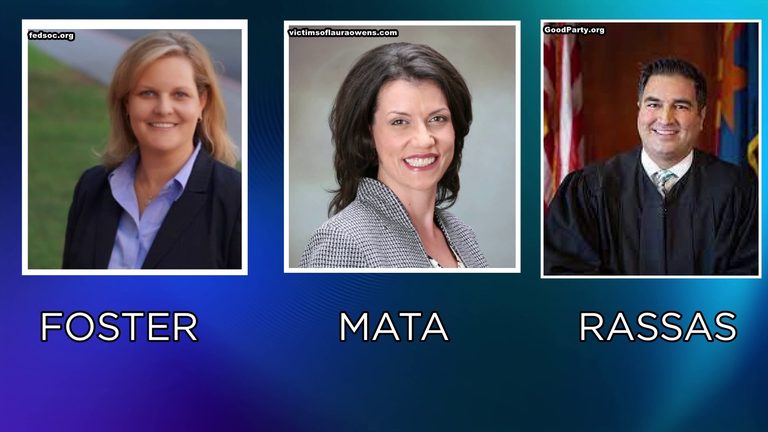
PHOENIX — In a rare development for Arizona’s judicial retention system, three sitting judges appear headed for defeat as the final votes are tallied. Appeals Court Judge Anni Foster, Family Court Judge Julie Mata and Juvenile Court Judge Michael Rassas each received a “yes” rating in recent judicial performance reviews, yet the ballot counts suggest a majority of voters are choosing “no”.
Why the Unexpected Turn?
The exact reasons behind the voters’ decisions remain unclear. Both the Maricopa County Republican Party and a progressive organization distributed voter guides that highlighted the three judges, urging the electorate to consider removal. While the guides presented differing rationales, the shared outcome is a heightened awareness of the judges among the public.
Legal Community Voices Concern
Attorney David Rosenbaum warned that the growing presence of interest‑group messaging could undermine judicial independence. “One potential evil is a judge realizing there are interest groups watching his shoulder every time he rules,” Rosenbaum said. He added that the prospect of losing a retention election may deter qualified lawyers from leaving private practice to serve on the bench, potentially shrinking the pool of experienced jurists.
How Retention Elections Work in Arizona
Arizona is one of nineteen states that use retention elections, allowing voters to simply vote “yes” or “no” on whether a judge should remain in office. Unlike contested elections, judges cannot run traditional campaigns, making it difficult for them to respond directly to voter concerns or counteract external messaging.
According to the Brennan Center for Justice, thirty‑eight states rely on some form of judicial election, with retention elections intended to provide a modest check on judicial performance while preserving independence.
Potential Impact on the Judiciary
If the three judges are removed, the vacancies will be filled by the governor’s appointment process, subject to confirmation by the state Senate. This could shift the ideological balance of the courts, a prospect that both conservative and progressive observers are watching closely.
Rosenbaum emphasized that the integrity of the judicial system depends on judges being free from political pressure. “When judges feel they are being judged by special interest groups rather than their actual performance, it erodes public confidence in the courts,” he said.
What Residents Can Do
Voters who wish to stay informed about upcoming retention elections are encouraged to review official performance evaluations, attend any public information sessions offered by the state judicial branch, and consider the broader implications of removing judges who have earned positive reviews.
Arizona’s next round of retention elections is scheduled for November 2028, giving the public ample time to engage with the process and ensure that the judiciary remains both accountable and independent.
Original reporting: azfamily KTVK/KPHO Phoenix (news) — read the source article.