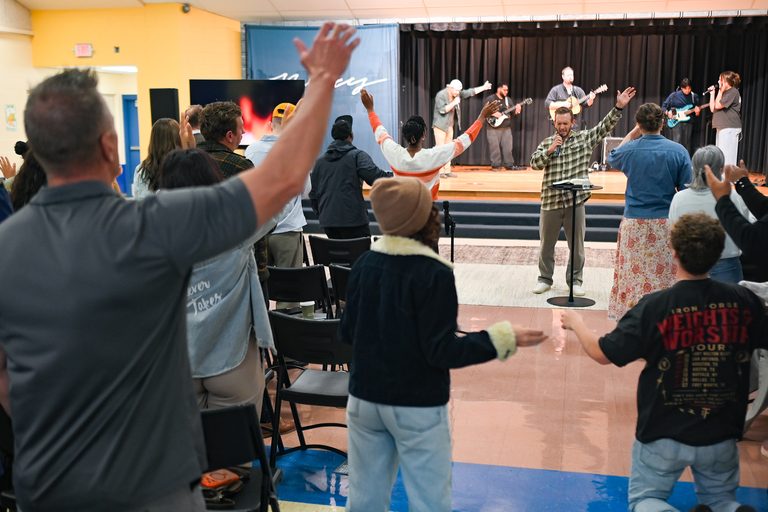
On Sunday morning, the cafeteria of Lee Lewis Campbell Elementary School in Austin filled with prayer and music as members of Mercy Culture Austin, a growing network of faith‑centered churches, gathered to process the recent election results. Pastor Isaac Hector, a longtime supporter of the Christian right, addressed the congregation, urging believers to focus on spiritual resistance rather than partisan anger.
Faith‑driven response to a blue Texas
Hector reminded attendees that the real battle is against “demonic forces” rather than political parties. He encouraged the crowd to pray for James Talarico, the Democrat who defeated Attorney General Ken Paxton in the Senate race, and to keep their eyes on societal ills such as pornography and addiction. “Y’all gotta find a little greater resistance in you,” he said, emphasizing that the fight for moral values continues regardless of who holds office.
Among the worshippers was Erin Stetson, a former California resident who moved to Texas in 2016 for lower living costs and school‑choice options. Stetson, who homeschools her children using the state’s private‑school voucher program, voiced concern that Democratic control could threaten that freedom. “I’m all for good education, but it’s that freedom of education that I’d like to have,” she said.
Republican voters share concerns about taxes and culture
Across the state, longtime Republicans expressed anxiety about potential tax hikes and cultural shifts. In the small town of Burke, East Texas, Jack Phillips warned that Democrats might raise fuel taxes, property taxes and even target the oil and gas industry that fuels the state’s economy. Phillips, who recently battled cancer, also feared redistricting efforts that could reshape Texas politics.
Further south in Bastrop, small‑business owners Rhonda Gannon and Kari Sneed echoed similar worries. Both women, who voted Republican in the midterms, said they fear higher taxes and the expansion of pediatric gender treatments in schools. “I don’t like the trans agenda. I don’t like the drag stuff myself,” Sneed said, while still offering Governor‑elect Gina Hinojosa a chance based on her promises to improve public schools.
Party leaders call for renewed outreach and messaging
Republican officials in West Texas described the election night as “horrible” and admitted they did not fully understand how the loss occurred. Donna Kelm, Ector County GOP chair, blamed a lack of voter education on issues such as the Iran conflict and tariff policy, noting that many voters focused only on short‑term results.
Midland County GOP chair James Beauchamp said the party must have “difficult conversations” about candidate quality and voter concerns. He argued that decades of Republican dominance led to complacency, with many voters assuming continued support without active outreach.
In Austin, Benjamin Shrader, 28, chairman of the Austin Young Republicans, framed the defeat as a wake‑up call. “We have the opportunity to win Texas back in two years,” he declared, urging the party to rebuild its infrastructure and reconnect with families who value faith, freedom and economic opportunity.
Looking ahead
While the GOP grapples with a new political reality, many Texas conservatives remain hopeful that the state’s strong cultural foundations—faith, family and liberty—will ultimately restore Republican leadership. The coming months will likely see increased grassroots organizing, renewed emphasis on school‑choice and continued advocacy for policies that protect the oil and gas sector and keep taxes low.
As the conversation shifts from shock to strategy, Texas Republicans are betting that their commitment to traditional values and constitutional freedoms will resonate with voters and bring the Lone Star State back under Republican stewardship.
Original reporting: Texas Tribune (HLL/CB) — read the source article.