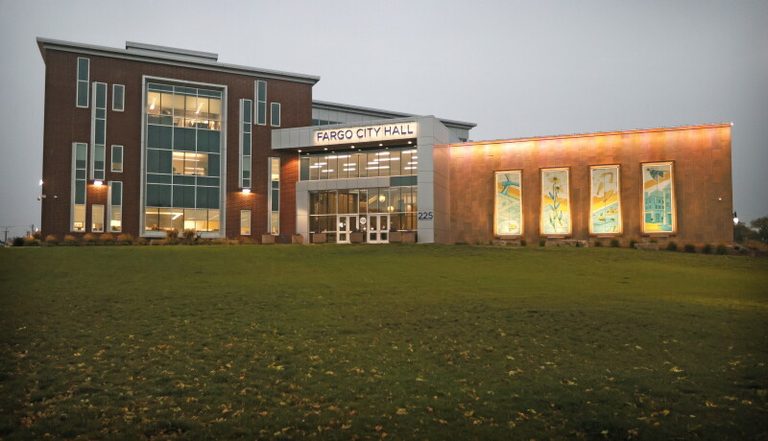
Fargo city officials reported on Monday that the city’s payment‑in‑lieu‑of‑taxes (PILOT) program is delivering higher wages and stronger property values, even as several participating companies have not met their job‑creation pledges.
Job creation falls short of commitments
Since the program began in 2017, twenty companies receiving PILOT incentives have collectively employed 2,036 workers. That figure is 277 jobs fewer than the 2,313 positions originally promised when the firms applied for the tax breaks, according to Ryan Aasheim, chief business development officer for Fargo Moorhead Economic Development, who presented the data to the Fargo City Commission.
Eight of the twenty companies missed their employment targets. The largest shortfall came from Border States Electric, which created 310 jobs—180 fewer than the 490 positions it had pledged. Other firms such as PRx, CoSchedule, Standard Industries, John Deere Electronic Solutions, Financial Bus Systems, Corvent and Anvil Design also fell short by varying margins.
Wages and payroll exceed expectations
Despite the employment gap, the average wage for PILOT‑receiving firms rose to $82,677, surpassing the promised average by $16,829. Total payroll for these companies reached $173 million, about $19.8 million higher than the city’s original estimate.
Economic Development President and CEO Joe Raso emphasized that the wealth generated by higher wages and increased payroll should weigh heavily in evaluating the program’s success. “The numbers show that these companies are creating wealth in the city, which is a critical metric,” Raso said.
Property values more than double
Property values for businesses benefiting from PILOT incentives climbed from $96.6 million in 2017 to $203.6 million in 2025—a 193 percent increase. For comparison, all commercial property values in Fargo grew 52 percent over the same period, rising from $6.1 billion to $9.3 billion.
These gains reflect the city’s definition of “primary sector” companies—those that add value to a product, process, or service and generate new wealth.
Policy implications and next steps
City commissioners raised questions about whether the program should continue to grant tax exemptions to firms that fail to meet job targets. State law permits Fargo to cancel future incentives for under‑performing companies, but reclaiming past incentives would require additional legal work, City Assessor Michael Splonskowski explained.
Mayor Josh Boschee announced that the city is revising its PILOT policy to include a provision that automatically cancels incentives for companies that do not report required data. The update also aims to clarify the process for potential claw‑backs.
All PILOT recipients reported their figures for the current year, and FedEx reported being nine jobs ahead of its promise. However, three firms—Appereo, DigiKey and FedEx—did not submit 2025 data, prompting city leaders to question why no penalties were imposed.
Looking ahead
Commissioner Chad Peterson praised the city’s transparency, noting that Fargo is “ahead of the curve” by using data‑driven reports to guide future decisions. He added that the information will help the city coach and investigate companies that fall short of their commitments.
“Now we are going to be able to tell the story of all the successes and hopefully minimal failures going forward,” Peterson said.
The Fargo City Commission meets every other Monday at 5 p.m. in City Hall, 225 Fourth St. N. Meetings are livestreamed and recorded on the city’s YouTube channel, and agendas and minutes are posted on the official website.
Original reporting: InForum (Fargo section) — read the source article.