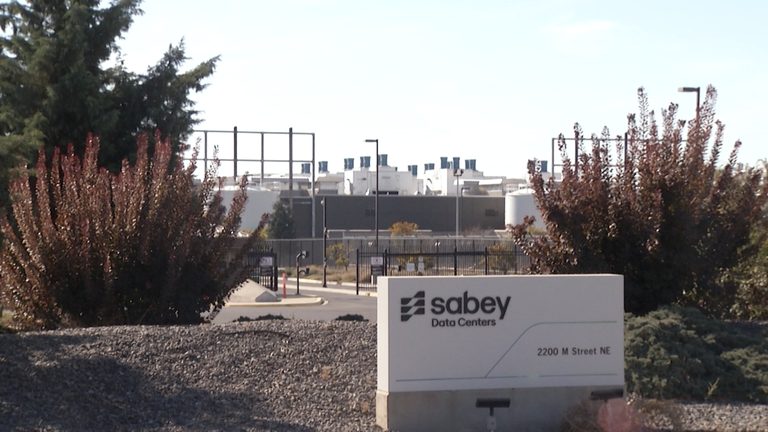
Quincy, Washington – The city’s long‑term strategy to attract data‑center operators is now paying off. Eight campuses are operating in the area, employing about 1,000 full‑time workers and generating tax revenue that has reshaped the municipal budget.
Economic impact and new public facilities
City Administrator Joe Harris explained that the additional revenue allowed Quincy to cut the levy rate for new projects from $3.12 to $0.88 per $1,000 of assessed value. That savings helped fund a brand‑new hospital, a modern high school, an aquatics center, upgraded police and fire facilities, and an expanded police force that now stands at 2.3 officers per 1,000 residents – well above the state average.
Superintendent Dr. Nik Bergman highlighted the $108 million bond that voters approved to build the new high school and renovate existing schools. The bond also financed new gymnasiums for every elementary school in the district.
Job pipeline for local youth
Microsoft partnered with Quincy Public Schools on a Data Center Technician Program. Graduates can start at salaries above $60,000, providing a family‑sustaining career path directly out of high school. “A kid can leave Quincy High School and go right to work the data centers,” Bergman said.
Water use and environmental concerns
While the economic benefits are clear, water consumption remains a point of contention. The centers use roughly 8 % of the city’s water supply. Quincy’s Q‑1 Water Program Manager Bob Davis said the city is exploring additional reuse water sources, including treatment plant output and water from the Columbia River Basin, to meet future demand.
Microsoft has already installed a reuse‑water system for its campus, and the city aims to have another plant operating by 2029. Newer facilities are shifting to mechanical‑chilled, non‑evaporative cooling systems, which reduce water use but increase electricity consumption.
Land values and future growth
Port of Quincy Commissioner Curt Morris noted that farmland once valued at $15,000 per acre could now fetch $125,000 per acre under the technology growth management map. This rise in property values has helped lower the tax burden on longtime residents.
Despite the optimism, some farmers and landowners expressed concerns about a planned 32‑mile, $86 million high‑voltage transmission line. They argue the public was not fully informed during the planning process.
Power supply challenges
Grant County Public Utility District’s Ty Ehrman warned that the region is approaching the limit of power generation from nearby dams. The district is seeking additional electricity sources to accommodate a projected doubling of data‑center load over the next five years.
City officials remain confident that most campuses have space for expansion, and new power projects slated for 2029 should keep pace with demand.
Local business perspective
Local café owner Ibis Ortiz reported strong morning traffic, especially for breakfast burritos, attributing the uptick to the influx of data‑center workers. A farmer who employs his son at a data center said the industry offers a more stable livelihood than traditional farming.
Overall, Quincy’s data‑center boom illustrates how strategic economic development can fund essential public services while prompting careful stewardship of water and land resources.
Original reporting: KHQ Spokane (news) — read the source article.