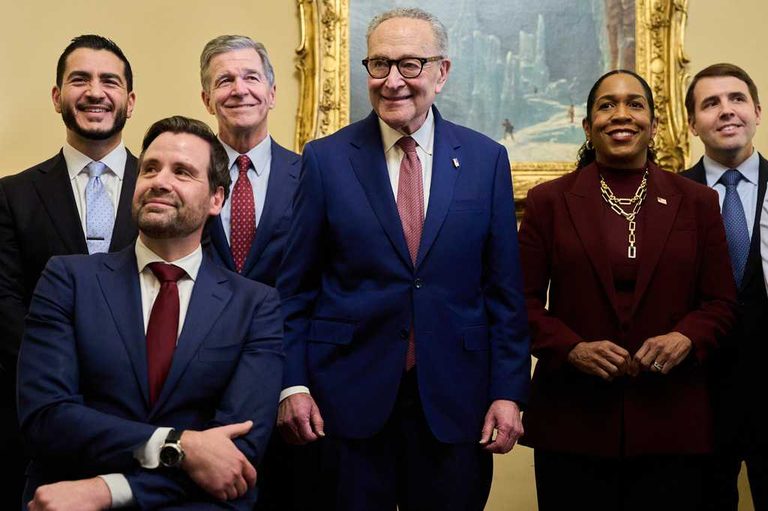
Washington, D.C. – After the recent midterm elections, both parties returned to the Capitol with a clear agenda: decide who will lead them in the next Congress. Republicans, having lost roughly a quarter of their conference, are set to vote on Tuesday whether to re‑elect South Dakota Senator John Thune as their Senate leader. Democrats, who could control as many as 56 seats, are holding private discussions about whether New York Senator Chuck Schumer should continue as their majority leader.
Republican leadership vote looms
Senator Thune, who succeeded Sen. Mitch McConnell two years ago, enjoys broad support among Senate Republicans. He is expected to win the secret‑ballot election easily, but a small group of GOP senators has called for a delay. Pennsylvania Sen. Dave McCormick argued that the party should first “digest and debate” the election results before choosing a leader. Utah Sen. Mike Lee and Wisconsin Sen. Ron Johnson also urged postponement until the outcomes of the pending Alaska and Mississippi races are known.
Thune responded that the conference will have a “very fulsome, robust conversation” before reaching a consensus, emphasizing that the decision rests with Republican senators. He reiterated his commitment to oppose any attempt to expand government size or undermine American institutions, stating, “The American people are not looking for socialist government and leftist fantasies.” President Donald Trump praised Thune as “a very fine man,” while noting that the leadership decision is ultimately up to the Senate.
Democrats weigh Schumer’s future
On the Democratic side, Senator Schumer has led the caucus for 12 years and guided the party to historic wins in the recent elections. While many colleagues, including Sen. Kirsten Gillibrand, continue to endorse his experience and dedication, there is a growing conversation about generational change. Maryland Sen. Chris Van Hollen is reportedly considering a challenge, and former Ohio Sen. Sherrod Brown has expressed support for Schumer but remains non‑committal.
Newly elected Democratic senators, such as Michigan’s Abdul El‑Sayed, have voiced their preferences, with El‑Sayed backing Van Hollen. Incoming Michigan Sen. Peggy Flanagan noted the importance of incorporating fresh voices into Senate leadership. The Democratic leadership election is expected to occur in December, also via secret ballot, and will require only a simple majority to win.
Implications for the next Congress
Both parties recognize that the upcoming leadership selections will influence their effectiveness in the 118th Congress and shape public perception ahead of the 2028 presidential election. Lawmakers are simultaneously working to fund the government, address national security appropriations, and consider bipartisan cooperation on energy permitting.
Republicans aim to confirm as many of President Trump’s nominees as possible before the new Congress convenes on Jan. 3, while Democrats plan to build on their momentum to advance affordability initiatives and other priorities.
What’s at stake for voters
The leadership outcomes will affect how each party navigates a divided Senate, the speed at which legislation moves, and the overall tone of federal governance. For constituents across the nation, the decisions made in these internal votes will reverberate in policies that touch everyday life, from economic stewardship to national security.
Original reporting: 40/29 / KHBS (NW Arkansas) — read the source article.