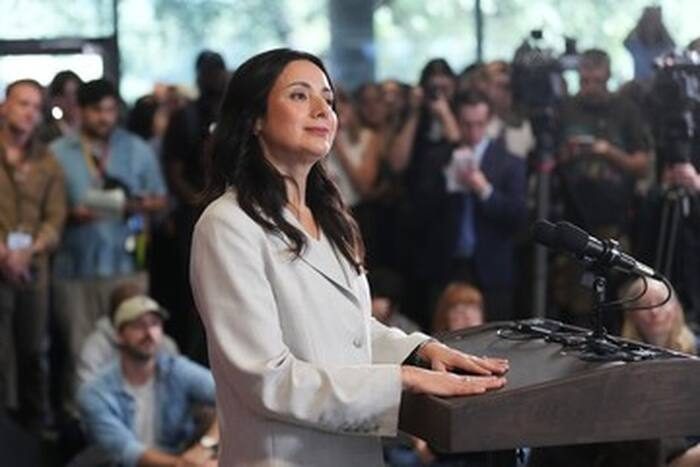
Governor‑elect Gina Hinojosa entered office with a clear promise to undo what she called the “Texas voucher scam.” In her Election Day acceptance speech, she announced that ending the school voucher program – which currently funds roughly 110,000 students attending private schools with state money – will be her first order of business.
Legislative hurdles and the role of the Senate
The Texas Constitution gives the governor limited direct authority over legislation. As Austin Bussing, an assistant professor of political science at Trinity University, explained, Hinojosa cannot unilaterally repeal the voucher law. “The powers of the governor in Texas state government, they don’t have the power to introduce a bill into the legislature,” he said. “So she can, sort of through rhetoric and speeches, try to establish an agenda of things that were important in the campaign and things that she’s politically committed to.”
Because the Republican‑controlled Senate holds a decisive majority, any effort to repeal or significantly scale back the program will face a partisan roadblock. Bussing noted that the Senate’s composition could be the biggest obstacle to a Democratic‑led effort, though he added that Hinojosa’s bipartisan transition team might help navigate the process.
Key personnel changes
Hinojosa also signaled a shake‑up at the Texas Education Agency (TEA). She plans to replace Commissioner Mike Morath, a longtime ally of Governor Greg Abbott. Bussing warned that the governor cannot simply appoint a successor; the nominee must be confirmed by the Senate, adding another layer of complexity.
State Senator Sarah Eckhardt, a Democrat who will assume the Comptroller’s office after longtime Republican Don Huffines, said her office will conduct a thorough audit of the voucher fund, which totals about one billion dollars. “The Comptroller’s office does not have the authority to make or change the law. It will be up to the Legislature whether to continue funding the program, at what level, and whether to deliberate any additional changes to the program,” a spokesperson for Eckhardt explained.
Potential paths forward
While a full repeal may be difficult, the governor does have several procedural tools. She can veto specific line‑items in the state budget without rejecting the entire budget, and she can call a special legislative session focused on eliminating vouchers – a tactic Governor Abbott used to pass the program originally.
Critics of the voucher system, including some rural Republicans, have expressed concerns about the use of public funds for private education. Their opposition could provide the necessary votes if the issue reaches the Senate floor.
Uncertain future for students
One unanswered question is what will happen to the 110,000 children currently enrolled in private schools under the voucher program if the legislation is rolled back. Parents and school administrators are watching closely, aware that any abrupt change could disrupt education for thousands of Texas families.
As the new legislative session approaches, Hinojosa’s administration will need to balance its policy goals with the realities of a Republican‑majority Senate, the procedural limits of the governor’s office, and the practical concerns of families affected by the voucher program.
Original reporting: San Antonio, TX News (HLL/CB) — read the source article.