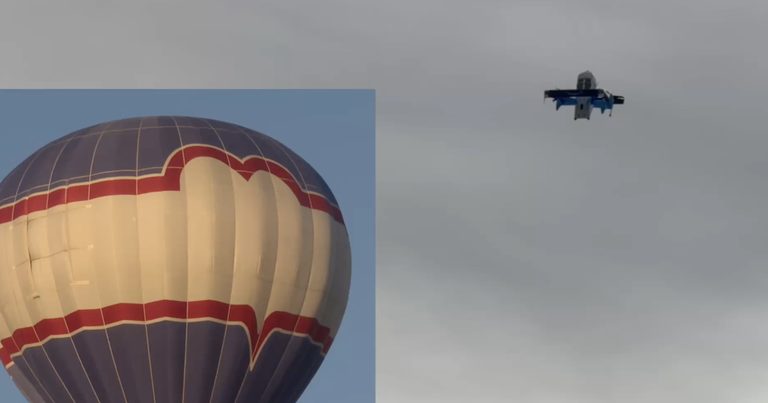
Greg Ashton, a veteran hot‑air‑balloon pilot who has been soaring over the Treasure Valley for nearly five decades, is sounding the alarm about Amazon’s expanding Prime Air drone delivery program. The company recently began operating delivery drones out of Nampa, Idaho, and Ashton says the low‑flying aircraft could intersect the flight paths of his balloons.
Local pilot voices safety worries
“I’ve seen a lot of drones, but I haven’t had big drones that drop packages,” Ashton told Idaho News 6. He explained that his balloon tours launch from several locations across the valley, including Nampa, Star, Middleton, Caldwell and Meridian. The new Amazon drones, which travel at about 40 mph, are now sharing the same low‑altitude airspace that balloonists rely on.
“It was a concern to us because we don’t want to collide with a drone in the airspace when we’re flying and we were not sure what the technology is of the drones. Can they see objects and avoid them?” Ashton asked.
Changes to launch sites
To put more distance between his balloons and the drone corridors, Ashton has temporarily moved his launch site to Ladybird Park near the Boise Fairgrounds. He said the shift gives him a safer buffer while he works with Amazon and regulators.
“If we’re flying over Meridian or something like that and then we got a 40‑mile‑an‑hour drone coming at us, it had potential to be scary,” he said.
Amazon’s response
Amazon officials explained that Prime Air drones are equipped with cameras, sensors and a “detect‑and‑avoid” system that continuously monitors the surrounding airspace. The company says the system is designed to recognize and steer clear of other aircraft, even those without radios or onboard computers – a category that includes hot‑air balloons.
“Our drones are built to detect other aircraft and take real‑time safety actions,” an Amazon spokesperson said.
Seeking a cooperative solution
Ashton plans to meet with Amazon representatives, the Federal Aviation Administration and other members of the balloon community in the coming weeks. “They’re going to learn about us. We’re going to learn about them, and then we’ll hopefully coexist in the same airspace,” he said.
After decades of flying in the Treasure Valley, Ashton emphasized that he wants new technology to complement, not disrupt, the long‑standing balloon business. “This is our favorite place to fly. It is in the Treasure Valley,” he added.
What’s next?
The upcoming meetings aim to develop clear operating guidelines that protect both balloon pilots and Amazon’s delivery drones. If a cooperative safety plan is reached, it could set a precedent for how emerging low‑altitude technologies share the skies with traditional aviation activities throughout Idaho and the broader region.
Original reporting: KIVI Idaho News 6 Boise metro (local) — read the source article.