Lee’s Summit, Mo. – On election night, Missouri voters sent a clear signal that they want their elected officials to put the people first. While Republicans still control the majority in both the state House and Senate, the long‑standing GOP supermajority was broken.
Democratic gains shift legislative dynamics
In the House, Democrats captured at least 16 new seats, narrowing the Republican margin. In the Senate, two pivotal districts flipped to Democratic candidates, further eroding the ability of the GOP to push legislation without any Democratic input.
For the past 14 years, Republicans have held a supermajority in both chambers, allowing them to pass bills that take effect immediately via a special emergency clause and to override any governor’s veto without needing a single Democrat’s vote. That power is now gone.
Local voices reflect frustration with Republican policies
Voters in Jackson County voiced disappointment with how Republican leaders have handled issues such as abortion rights, initiative petition reform, and redistricting. “I was like, ‘that seems unfair,'” said Jacob Xiayaphet, a voter who cited the new redistricting maps as a concern.
“Right to life and women’s choice is the main reason we’re here,” added Matthew Haas, emphasizing the importance of protecting unborn children while preserving personal liberty.
Adrianne Miller, another Jackson County voter, said, “I want people who stand up for my kids, grandkids,” underscoring the desire for representatives who prioritize family values.
Republican perspective acknowledges national influence
State Sen. Mike Cierpiot, whose term ended due to term limits, noted that national factors such as high gas prices played a role in the outcome. “I think this was more anti‑D.C. Republican than it was anything pro‑Democrat,” he said, suggesting that the swing may be a temporary reaction to federal policies rather than a permanent shift.
Cierpiot also expressed confidence that Missouri will swing back to Republican control in the next election cycle, a view shared by many local GOP activists.
Democratic organizers celebrate the new balance
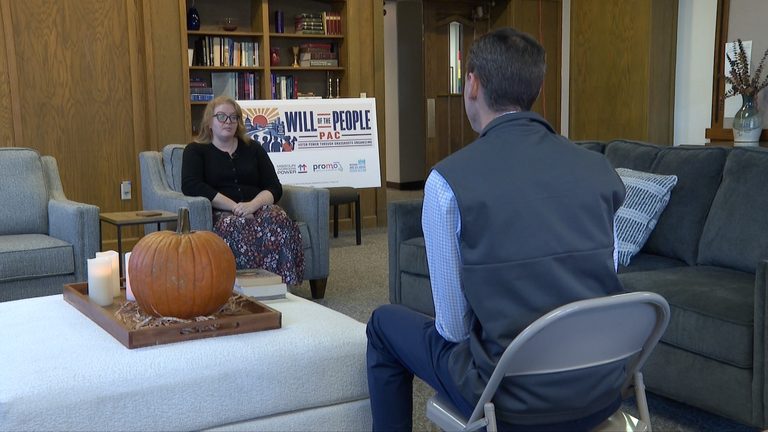
Caitlin Adams, spokesperson for the Will of the People PAC, which supported 13 Democratic candidates in the state races, said the results create a roadmap for better serving Missourians. “We want to take care of our families, put more money in our pockets, and help our communities thrive,” she said.
Adams believes that breaking the supermajority will force both parties to work together, leading to legislation that more accurately reflects the needs of everyday Missourians.
What the new legislative landscape means
Without a supermajority, Republicans will need Democratic votes to pass any bill that includes the emergency clause or to override a gubernatorial veto. This new reality could encourage more bipartisan dialogue on issues ranging from fiscal policy to education and public safety.
Missouri’s next legislative session will test whether the state’s lawmakers can find common ground or whether partisan gridlock will dominate the agenda.
As the dust settles, both parties are already looking ahead to the 2028 elections, where the balance of power will be contested once again.
Original reporting: KSHB 41 Kansas City (local) — read the source article.