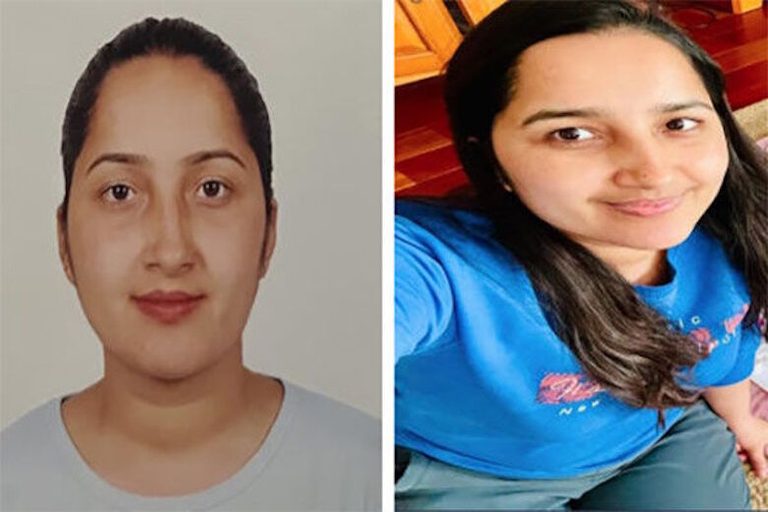
Manassas Park, Va. – The murder trial of Naresh Bhatt entered its final phase on Monday as prosecutors confronted the defense’s suicide theory. Bhatt, who testified for a third day, maintains he found his wife, Mamta Kafle Bhatt, dead by suicide in July 2024 and that he did not kill her.
Defense testimony and expert witnesses
During cross‑examination, defense attorney Tracey Lenox asked Bhatt to describe his reaction when he discovered his wife’s body. Bhatt said his whole body was shaking, “uncontrolled, like extreme pain or trauma,” and that he was unable to think. When pressed about alleged abuse, Bhatt denied any physical violence toward his wife.
The defense also called psychologist Barry Rosenfeld, who testified that Bhatt suffers from post‑traumatic stress disorder (PTSD) stemming from childhood experiences, including an alleged abduction by Maoist rebels in Nepal. Rosenfeld described Bhatt’s panic response as “plausible” but not a justification for dismembering a body.
Prosecutors’ rebuttal
Prosecutor Matthew Sweet challenged Rosenfeld’s conclusions, asking whether Bhatt was still in a dissociative state when he allegedly dismembered and disposed of his wife’s remains. Rosenfeld answered, “No, I don’t think he was.” Sweet also highlighted that Rosenfeld’s opinions relied heavily on Bhatt’s own account, which the prosecutor said had not been independently verified.
In addition, the prosecution questioned the credibility of the defense’s forensic challenges. Former NCIS Deputy Director Elizabeth Pierri testified that her review of the blood‑evidence reports raised concerns about how the evidence was collected and interpreted. Another former NCIS leader echoed those concerns, stating she could not rule out the possibility that Mamta died by suicide and that the body was later moved.
Forensic evidence under scrutiny
Both defense witnesses suggested that the blood evidence might have been mishandled, potentially supporting a suicide scenario. Prosecutors countered that the forensic analysis was sound and that the evidence contradicted the defense’s narrative.
As the trial approaches closing arguments, the jury will consider conflicting expert testimony, forensic findings, and the stark differences between the prosecution’s murder theory and the defense’s claim of suicide.
What’s next?
With testimony nearly complete, the court will move toward closing statements from both sides. The jury’s deliberations are expected to begin shortly thereafter, leading to a verdict that will determine whether Bhatt is found guilty of murder or acquitted based on the suicide claim.
Original reporting: Alexandria, VA News – WTOP News — read the source article.