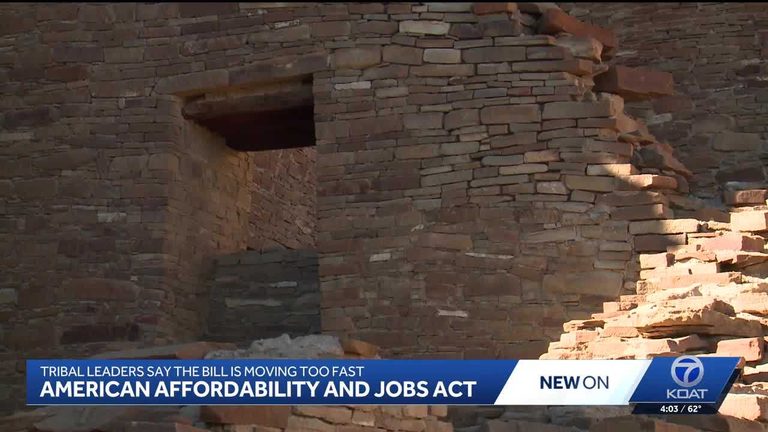
Tribal leaders from Acoma Pueblo and San Ildefonso Pueblo traveled to Washington, D.C., on Monday to voice strong opposition to the Bipartisan Affordability and Jobs Act (BAAJA) before the Senate votes on the measure later tonight. The bill, championed by Sen. Martin Heinrich (D‑NM), seeks to speed approvals for new power plants and transmission lines and to require large data‑center operators to help fund grid upgrades.
Sen. Heinrich’s push for the bill
Heinrich praised the legislation, saying it would hold corporations accountable by “forcing big corporations to pay their full share instead of pushing costs on the consumers.” He also highlighted the projected creation of “100,000 trades and manufacturing jobs, good‑paying jobs that workers can be certain will be around,” and claimed the bill could cut power‑sector emissions by up to 20 percent over the next decade, resulting in cleaner air, healthier communities, and lower health‑care costs.
Tribal concerns about cultural and historic protection
Despite these promises, tribal leaders argue the bill threatens historic preservation and tribal rights. They contend it would override sections of the National Historic Preservation Act that require federal agencies to consult with tribal nations before proceeding with projects that could affect cultural sites.
“We would like that bill killed today,” said Acoma Pueblo Governor Charles Riley, emphasizing that the draft legislation received only a single hearing and that the amendments were provided just a day before the vote, leaving insufficient time for meaningful review.
San Ildefonso Pueblo Governor Christopher Moquino echoed the sentiment, noting that “hundreds of tribal nations across the country are working to persuade lawmakers from all parties to alter course.” He warned that if the bill moves forward, the impact on tribal nations and the broader environment could be irreversible for decades.
Amendments and consultation promises
Heinrich responded to tribal concerns by pointing to recent amendments that would require federal agencies to “consult, not may consult, early with tribes on projects that will affect important cultural sites.” He said the administration would be mandated to involve tribes at every step of the permitting process.
“I’ve heard directly from tribal leaders about the importance of having a meaningful voice,” Heinrich said, asserting that the bill now includes mandatory tribal consultation.
Additional opposition from New Mexico officials
Other New Mexico officials have also spoken out. U.S. Rep. Teresa Leger Fernandez issued a written statement criticizing the proposal, arguing it would give the Trump administration “sole discretion” to decide whether a sacred or historic site deserves protection and would limit federal courts from overturning destructive projects, including data centers, mining, and fossil‑fuel developments.
Governor‑elect Deb Haaland released a statement standing with tribal nations, saying the legislation “denies tribes meaningful consultation and weakens their ability to protect culturally significant sites.” Both officials stressed the need for stronger tribal input and preservation safeguards.
What’s at stake
The debate centers on balancing the administration’s desire to accelerate energy infrastructure and create jobs with the need to protect tribal heritage and historic sites. While proponents argue the bill will boost the economy and reduce emissions, opponents fear it could set a precedent for sidelining tribal sovereignty in future federal projects.
The Senate is expected to vote on the bill Monday night. Tribal leaders and New Mexico representatives have urged lawmakers to reconsider or amend the legislation to ensure that tribal consultation is not merely symbolic but legally binding and effective.
Original reporting: KOAT Albuquerque — read the source article.