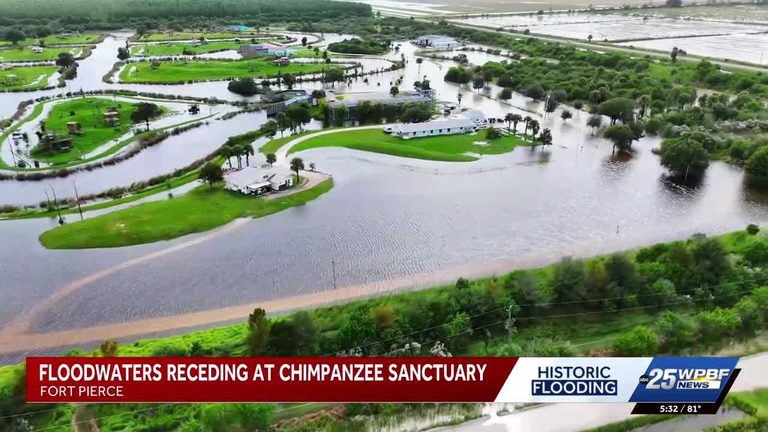
Fort Pierce, Fla. – Save the Chimps, a 150‑acre sanctuary that houses over 200 rescued chimpanzees, is steadily recovering from the historic flooding that struck the area after a 200‑year rain event delivered 19 inches of rain.
Water recedes, roads reopen
Facilities director Mark Yohannan reported that water levels have dropped enough to allow staff to drive on roughly 90 percent of the sanctuary’s 1.2 miles of internal roads. “We’ve probably lost at least 7 or 8 inches of water,” he said, adding that the remaining water should dry up overnight.
Creative solutions for feeding
During the peak of the flood, staff faced the challenge of delivering food to chimpanzees on isolated islands. When a land bridge to an indoor house on one island was submerged, the team used a drone to drop supplies. “Caleb stayed out because he loved his island,” CEO Ana Paula Tavares explained, noting that the chimp’s preference forced the sanctuary to think creatively about how to get food and water to the animals.
Transportation hurdles
The sanctuary’s fleet of battery‑powered golf carts, normally used to move staff, food, and up to 3,000 pounds of supplies daily, became inoperable when the roads were underwater. “Those were rendered inoperable because you couldn’t see the road; they’re battery carts,” Yohannan said. To keep operations moving, employees turned to tractors, trailers and large off‑road vehicles.
Working with local officials
Yohannan met with representatives from the St. Lucie Water River District to discuss the flood’s impact. He praised the county’s response, describing the event as a “200‑year event” and acknowledging that local officials are working hard to restore normalcy.
Lessons learned and future preparedness
Both Yohannan and Tavares said the flood highlighted gaps in the sanctuary’s insurance coverage and infrastructure. “We have very good insurance but not flood insurance because we didn’t have floods in Florida. So now we will look into that,” Tavares said. Yohannan added that larger pumps and better forecasting could improve future readiness, but emphasized that the sanctuary’s situation mirrors that of many neighbors facing unprecedented weather.
Continuing care for the chimps
Despite the challenges, the sanctuary’s staff remain focused on the well‑being of the chimpanzees, who live in family groups on 12 islands ranging from 11 to 21 individuals each. With the water receding, caretakers are once again able to access most islands, resume regular feeding schedules, and conduct health checks.
Save the Chimps continues to rely on donations and community support to rebuild and strengthen its facilities. The organization encourages local residents to stay informed about recovery efforts and to consider contributing to the sanctuary’s ongoing mission of providing a safe, permanent home for rescued chimpanzees.
Original reporting: WPBF (Treasure Coast / Hearst) — read the source article.