Montevideo, Uruguay – On Saturday, Pope Leo XIV began his three‑nation South American tour by speaking to thousands of Uruguayans about the power of fraternity and faith. The pontiff used the nation’s iconic mate tea as a symbol of shared values, urging believers to build bridges of unity in a country where secularism has grown strong.
Mass in Paysandú draws 40,000 despite rain
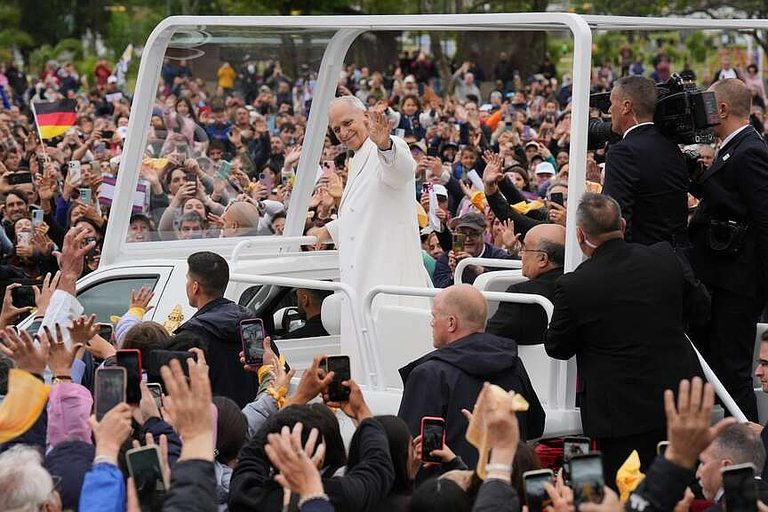
Leo’s first stop was Paysandú, a western city on the Uruguay River bordering Argentina. Despite morning rain and gray skies, the Vatican reported that roughly 40,000 people gathered in a stadium for the Mass – many traveling from neighboring Argentina and Brazil. The crowd cheered, waved yellow handkerchiefs, and welcomed the Pope in an open‑sided popemobile.
Speaking in Spanish, Leo reminded the audience that Catholicism has been “part of the life of the Uruguayan people since their earliest days, and it must be passed on to future generations with creative courage.” He highlighted the nearby bridge over the Uruguay River as a literal and figurative example of connection, urging pilgrims to cross both physical and spiritual divides.
Mate tea as a metaphor for communion
The pontiff then turned to mate, the bitter herbal tea that Uruguayans carry everywhere. He described the ritual of sharing mate – steeped in a hollowed gourd and sipped through a metal straw called a bombilla – as a lesson in hospitality and unity. “It teaches us to share and to be together, strengthening the bonds that unite us as brothers and sisters,” Leo said. Industry estimates indicate Uruguayans consume roughly nine kilograms of dried mate leaves per person each year, more than any other nation.
Local resident Jorge Monzón, 64, admitted he rarely attends Mass, but said the Pope’s focus on common customs made the experience “appealing.”
Church outreach in Montevideo’s Casavalle neighborhood
Later Saturday, Leo visited Casavalle, a Montevideo district plagued by drug trafficking and gang violence. He toured new homes built by the Our Lady of Guadalupe Parish and praised the parish’s drug‑rehabilitation programs, which receive donations from the U.S.‑based Papal Foundation.
Leo invoked the biblical Good Samaritan, urging Christians not to turn a blind eye to children who stay home out of fear. Uruguay boasts near‑universal primary school enrollment, yet only about half of its youth finish high school – a rate that drops to one in four for the poorest families.
Jonathan Tropiano, 28, shared his own transformation: after a stint in prison, he found hope through the local church and turned his life around, saying, “My life was horrible, with so much suffering. But then I found God and that was when I started to be a better person.”
Evening vigil and a message of hope
That evening, Leo presided over a prayer vigil at Montevideo’s historic Centenario Stadium, the same venue where Pope John Paul II celebrated Mass in 1988. The Vatican estimated 70,000 attendees inside the stadium and another 30,000 watching on large screens.
Addressing the crowd, Leo noted that the relatively small Catholic population in Uruguay should not be seen as a sign of insignificance. “God chose Bethlehem, and that choice alone is enough to prevent us from equating smallness with insignificance,” he said.
Cross‑border interest from Argentina
Because Paysandú sits just across the bridge from the Argentine city of Colón, many Argentines traveled to see the Pope. Luciana Lobato, a 20‑year‑old Argentine tour agent, explained that “Argentina is a much more religious country than Uruguay, and there’s this desire to be here to witness something historic.”
Leo’s Uruguay visit concludes a day of outreach that will continue with stops in Argentina on Sunday and Peru later in the week.
Original reporting: Texarkana Gazette — read the source article.