Denver’s Department of Housing Stability announced that the city intends to award contracts for two of its largest homeless shelters to Urban Alchemy, a secular nonprofit that employs people with lived experience of incarceration, substance use and homelessness. The decision, which still requires a vote by the Denver City Council, marks a significant shift in how the city’s shelter system will be operated beginning in 2027.
Crossroads shelter contract
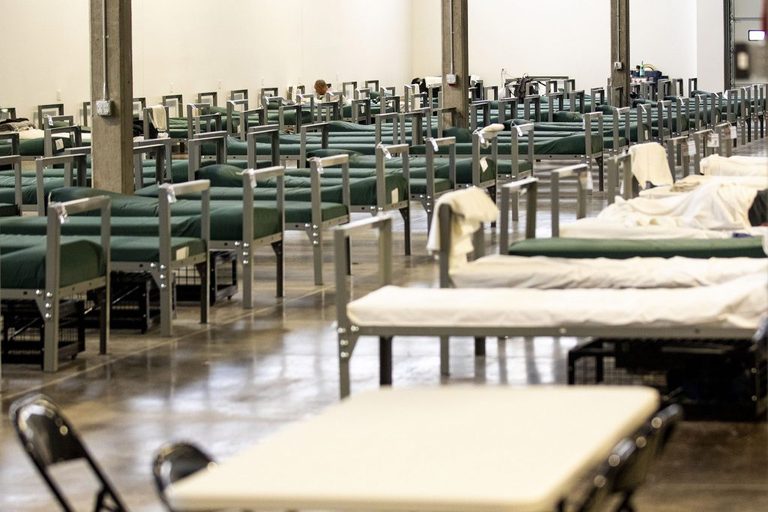
The 300‑bed Crossroads shelter on Brighton Boulevard, run by The Salvation Army since 1983, was the subject of a competitive bidding process. Urban Alchemy emerged as the lowest‑cost bidder for a one‑year, performance‑based contract valued at $5.6 million. The Salvation Army issued a statement expressing gratitude for its decades of service and noting that it is pleased to see other organizations stepping up to continue the work.
48th Avenue Men’s Shelter contract
Urban Alchemy also won a three‑year contract to operate the 48th Avenue Men’s Shelter, a facility previously managed by Denver Rescue Mission since 2021. The contract is projected to cost the city $33 million. Denver Rescue Mission CEO Dennis Van Kampen said the organization is intentionally moving away from operating group shelters and is focusing on a new $27 million “homeless resolution center” in Northern Colorado that emphasizes trauma‑informed, dignified care.
Impact on shelter staff
The transition raises questions about the future of the 71 employees currently working at the Crossroads shelter. The Denver Post reported that those workers may be laid off, but Van Kampen expressed hope that Urban Alchemy will rehire many of them. Urban Alchemy spokesperson Jess Montejano said the nonprofit will meet with current staff and consider interviews, but the final hiring decisions will remain with Urban Alchemy.
City officials’ perspective
Mayor Mike Johnston’s office praised Urban Alchemy’s performance at the Aspen shelter, which the nonprofit took over in 2025. City officials highlighted positive data the organization collects on client interactions, noting that the nonprofit’s approach has shown measurable improvements. Jon Ewing, a spokesperson for the mayor’s office, said, “They have capacity, and we have been pleased with their work so far.”
Community concerns
Some shelter clients have criticized Urban Alchemy for confiscating key cards to individual rooms, a practice the nonprofit says is intended to increase staff‑guest contact and improve safety. The organization acknowledges the concern and emphasizes that its policies are designed to balance privacy with the need for effective supervision.
Next steps
The contracts will be placed before the Denver City Council for a final vote. If approved, Urban Alchemy will assume responsibility for both shelters in early 2027, continuing its rapid expansion that began in 2018. The nonprofit now employs more than 1,000 staff nationwide, with the majority having personal experience of incarceration, substance use or homelessness.
What this means for Denver
City leaders view the transition as an opportunity to modernize the shelter system, introduce trauma‑informed practices, and potentially create more stable pathways out of homelessness. By awarding the contracts to a nonprofit that directly employs individuals with lived experience, the city hopes to strengthen the connection between service providers and the people they serve.
Original reporting: Denverite — read the source article.