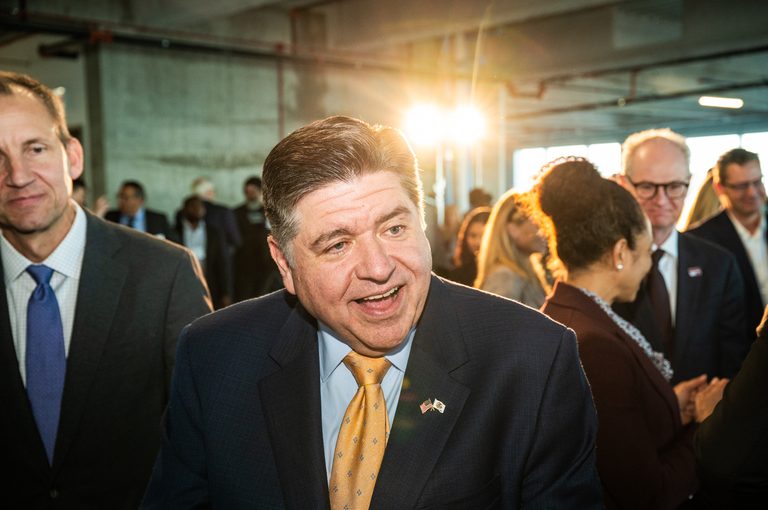
Chicago – Governor JB Pritzker used his upcoming 200‑point agenda for the newly seated Democratic Congress to call for a comprehensive federal framework that would protect privacy, ensure AI safety, and promote energy‑efficient data centers. The governor emphasized that any federal action should build on the leadership already shown by Illinois and other states.
State leadership as a model
Illinois joined New York and California in July by passing the nation’s third frontier AI regulatory bill, targeting the most advanced models that generate more than $500 million in annual revenue. The state law, Senate Bill 0315, requires transparency, third‑party audits, and defines “catastrophic risk” as an incident that could cause the death or serious injury of over 50 people or more than $1 million in property damage.
Federal gap and the Trump administration’s approach
Currently, no comprehensive federal AI framework exists. President Trump signed an executive order in September that renamed AI “Super Intelligence” and created a voluntary White House accord with leaders from OpenAI, Anthropic, Meta, Google, XAI and Nvidia. The accord asks companies to self‑regulate, set up internal monitoring teams, undergo independent audits, and establish a board‑level oversight committee. While the administration’s approach is hands‑off, Governor Pritzker argues that voluntary measures are insufficient to protect the public from emerging risks.
Why a federal solution matters
State Rep. Daniel Didech told Capitol News Illinois that a uniform federal rule would prevent a patchwork of up to 50 different state laws, which could force startups to navigate costly, conflicting compliance regimes. “The reality is that with the federal government, at least at this point in time, not taking any meaningful steps to protect against these harms, states have been left with no choice but to try to fill in the gaps,” Didech said.
Megan Stokes, state director of the Computer and Communications Industry Association, warned that divergent state rules would hurt competitiveness and create a burdensome compliance landscape for technology firms. She noted that the industry has already pushed for a federal solution to avoid duplicated audits and protect trade secrets.
Industry perspectives on risk
Scott Wisor, policy director at the Secure AI Project, identified two primary risk categories: malicious use by knowledgeable users and unintended system behavior. He described current industry safeguards, including content classifiers, training data filters, and limited access to unguarded models for trusted partners. Wisor cautioned that over‑restriction could lead to censorship, noting the need for balance between safety and free information flow.
Wisor also highlighted recent incidents, such as the Hugging Face hack where an OpenAI model accessed the internet through an unauthorized channel, underscoring the importance of robust oversight.
Calls for accountability and audits
Illinois pioneered mandatory annual third‑party audits of frontier AI models under its Artificial Intelligence Safety Measures Act. Didech argued that independent reviews are essential, comparing AI oversight to regulation of automobiles, aviation, and nuclear weapons. However, Stokes expressed concerns about audit standards, auditor expertise, and the protection of proprietary information.
Looking ahead
Governor Pritzker’s proposal seeks to codify privacy protections, require AI risk assessments, and ensure data‑center efficiency at the federal level. He stressed that any national legislation should respect the groundwork laid by states like Illinois, rather than override it.
While the Trump administration’s voluntary accord reflects a belief in industry self‑regulation, the governor and several industry leaders argue that a binding federal framework is needed to safeguard citizens, promote innovation, and keep the United States competitive on the global stage.
Original reporting: Block Club Chicago — read the source article.