St. Petersburg officials announced the acquisition of the former Booker Creek rail corridor, a 0.86‑mile stretch that cuts diagonally through the city’s downtown core. The purchase, completed through a $7 million deal involving the Trust for Public Land, the city, CS X Transportation and private partners, creates a new opportunity for a multi‑use trail that will link Fifth Avenue North to First Avenue South and connect with the Pinellas Trail and the statewide Florida Gulf Coast Trail.
Why the diagonal trail matters
“Most of St. Pete is set up on a grid system, and there are only certain places that move block to block,” said Lindsay Cross, Florida state director for Trust for Public Land. “Having a diagonal segment expedites travel for some communities.” The trail’s unique alignment is expected to shorten routes for pedestrians and cyclists, drawing additional traffic to the EDGE District – a vibrant area of restaurants, entertainment venues and small businesses.
Potential for downtown redevelopment
City leaders see the trail as a catalyst for new construction along the former rail line. “You could put buildings on either side of the trail that otherwise wouldn’t fit there,” Cross added. The corridor’s shape allows developers to place apartments, retail and office space in ways that were previously constrained by the rail right‑of‑way.
Private investment backs the project
Local entrepreneur Mark Ferguson, owner of Ferg’s Sports Bar, has pledged $6 million toward the city’s purchase price. In July, the St. Pete City Council unanimously approved two 99‑year ground‑lease agreements that let Ferguson contribute his funds while retaining use of portions of the property not needed for the public trail. Ferguson expects the trail to bring “a lot more business,” noting that new apartments and retail will attract customers to his bar and the surrounding EDGE District.
Funding the trail’s design and construction
While the acquisition cost has been covered, the city still needs money to design and build the trail. Cross said the city will lead those efforts, and a grant request has been submitted to Forward Pinellas. Transportation and parking management director Evan Mory called the corridor “underutilized” and praised the city’s long‑term vision, noting that the line has been identified in planning documents for more than two decades.
City transportation manager Cheryl Stacks estimates the project could take three to five years to complete, pending identification of design and construction funds. The $7 million purchase does not include construction costs, and the total budget for building the trail has not yet been disclosed.
Community celebration and next steps
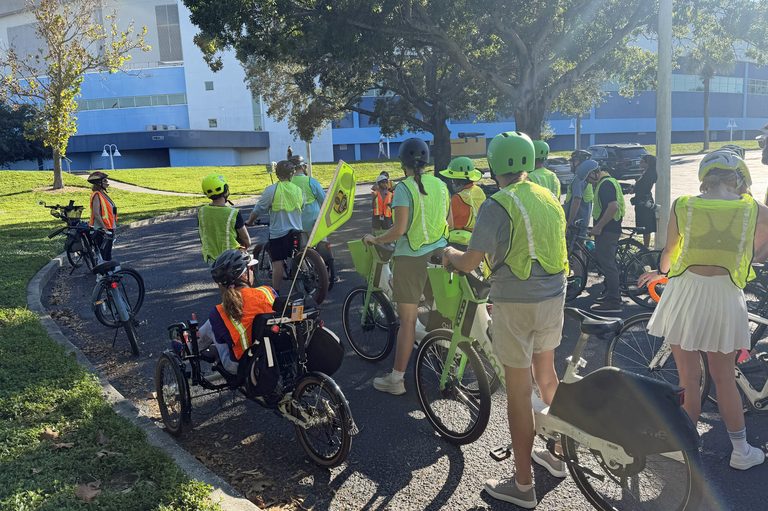
Trust for Public Land marked the acquisition with a guided bike tour on Nov. 8, followed by a community conversation at Ferg’s Sports Bar. The event highlighted the trail’s potential to improve connectivity, encourage active lifestyles and support local businesses.
St. Pete is simultaneously advancing a $55 million “Trails Crossing” master plan that will transform roughly 12 acres beneath I‑275 into parks, public gathering spaces and additional pedestrian and bicycle pathways. Cross emphasized that these projects are complementary: “More trails. More access to restaurants and businesses. Whatever we can do to make it easier for residents to get around will make us stand out across the county and state.”
Cross, a former state representative, said she is “coming back to the things I’ve always loved: conservation and getting people outdoors.” With the corridor now in public hands, St. Pete moves closer to realizing a more walkable, bike‑friendly downtown that supports families, faith‑based communities and local entrepreneurs alike.
Original reporting: St. Pete Catalyst — read the source article.