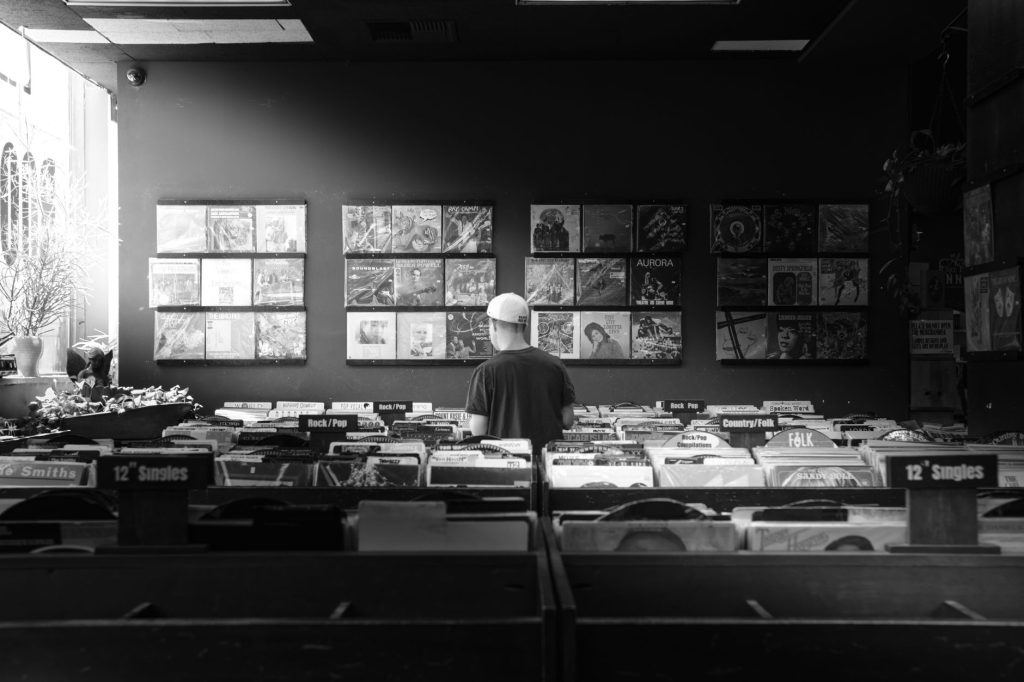
Most record stores smell like dust and old cardboard. Fox Wax Records, on New York Street in downtown Aurora, smells like coffee and something you can’t quite name — a little like the inside of a speaker cabinet, maybe. That’s not an accident. The owner, a longtime Aurora resident, built the space to feel like a place you’d actually want to spend two hours in, not sprint through.
You might walk in expecting the usual setup: bins sorted by genre, a turntable playing something obscure, a clerk who makes you feel faintly judged for asking about Fleetwood Mac. That’s not what you get here. The staff will talk you through anything — why a particular pressing of a Coltrane record sounds better than a reissue, what makes a certain 45 worth its asking price, or whether the used copy of Rumours you’re holding is actually in good shape. They mean it. This is not performative helpfulness.
The selection leans heavily toward rock, soul, jazz, and hip-hop, with a used section that turns over fast enough to reward repeat visits. New arrivals show up weekly, and regulars know to come in on Thursday or Friday if they want first crack at anything interesting. The used bins start around two or three dollars and climb depending on condition and rarity; new vinyl runs the same range you’d find online, sometimes cheaper. There’s no pretense about pricing — the stickers are clear, and if something seems off, you can ask.
What genuinely sets Fox Wax apart from the suburban record store experience is that it feels embedded in the neighborhood rather than dropped into it. Aurora has a dense, working music scene — a lot of musicians who play the local clubs or teach lessons on the side — and they shop here. You’ll overhear real conversations about gear, upcoming shows at RiverEdge, local bands worth seeing. It’s the kind of ambient local knowledge you can’t get from an algorithm.
The shop hosts occasional listening events and in-store performances, usually on weekends and usually announced a week or two out on their social media. These tend to be low-key: a few folding chairs, a decent sound system, maybe twenty people max. The scale is intentional. If you show up without knowing an event is happening, you might wander into something genuinely good.
Parking on New York Street can be tight on a weekend afternoon, but the garage one block over is easy and usually has space. The shop itself is compact — maybe eight hundred square feet — so if it gets crowded, browsing requires a little patience. That’s about the only friction in the whole experience.
Plan for at least forty-five minutes if you’re serious about looking. Budget somewhere between ten and forty dollars depending on how much self-control you have around used jazz records. And go without a specific list in mind — the best finds here are the ones you weren’t expecting to need.