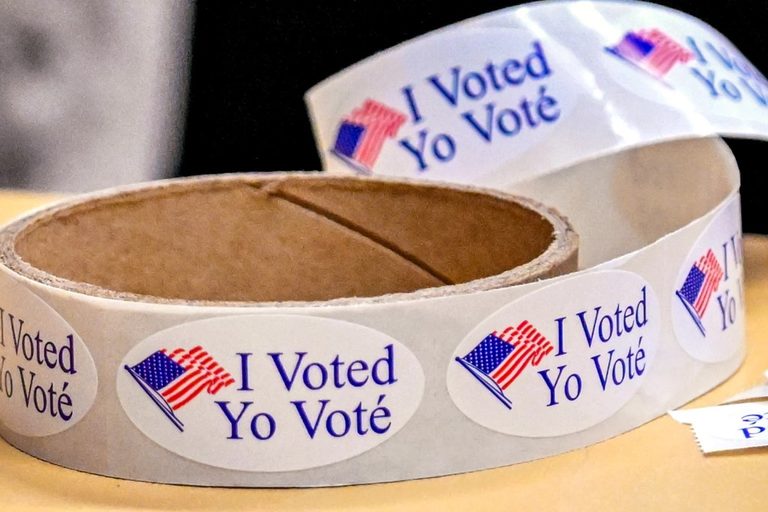
Madison, Conn. – On Election Day, Deputy Secretary of the State Jennifer Barahona warned voters that trying to “test” the voting system by casting multiple ballots is illegal voter fraud. The warning followed a recent incident in which Terri LaChance, a 65‑year‑old registered Democrat, attempted to obtain a second ballot at her local polling place.
What happened
According to documents obtained by Connecticut Public, LaChance checked in at the Madison polling location on Nov. 1, had her driver’s license scanned, received a sticker, signed, and was handed a ballot. After completing her vote, she returned to the same site, checked in again, and was issued a second ballot after signing a second label. LaChance told an election worker that she had already voted and said she believed she could have cast another vote if she had not spoken up.
In a brief statement to the media, LaChance said she was not intending to vote twice but wanted to “see if it was possible” and “how far I would get if I tried,” citing concerns after seeing social‑media posts alleging that voting machines could change votes.
State response
Barahona emphasized that voting more than once is a criminal offense in Connecticut, punishable by a $300‑$500 fine, one to two years in prison, and loss of voting rights. “Attempting to test the system by voting twice is not a harmless experiment,” she said at a press conference.
Matthew Clyburn, assistant director of communications for the Secretary of the State’s Office, explained that the state’s voter registration system records each voter’s participation, preventing a second vote during early voting, absentee voting, or on Election Day. “When a voter casts a ballot during early voting, election officials record that the voter has voted in the statewide voter registration system,” Clyburn said.
Alexander Russell, director of the University of Connecticut Center for Voting Technology Research, added that each town maintains a physical poll book where voters are crossed off after casting a ballot, providing an additional safeguard against double voting.
Other incidents
The Madison case is one of at least two recent incidents in Connecticut that raised concerns about improper voting activity. Records show that in October, another woman—described by local officials as possibly having short‑term memory issues—checked in to vote two days after successfully voting early at the same location. Election officials noted that the voter’s name did not appear on the early‑voting report, yet the electronic registration system indicated a ballot had already been issued.
Because the tabulator could not adjust the count, an early‑voting moderator sought assistance from state officials. Both incidents have been referred to the State Elections Enforcement Commission (SEEC) for further review, with the commission scheduled to meet on Nov. 18. A SEEC representative declined to comment pending an investigation.
Legal context
Under Connecticut law, casting more than one ballot in the same election is a felony. Penalties include fines ranging from $300 to $500, imprisonment for one to two years, and disenfranchisement.
Barahona concluded the press conference by reaffirming the office’s commitment to election security: “We understand that people want to know that our elections are safe and secure, so do we. Protecting the integrity of our elections is our job.”
Original reporting: The Connecticut Mirror — read the source article.