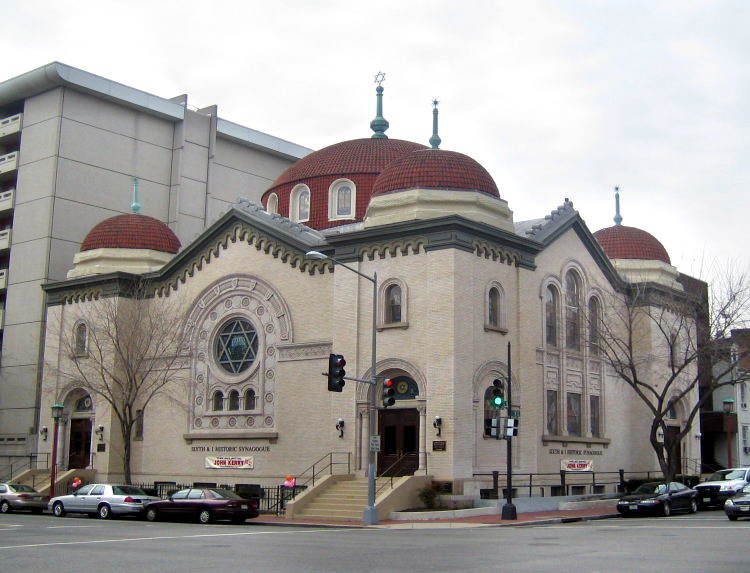
On a Tuesday in March, with the kind of drizzle that makes the Metro smell like wet wool, Sixth & I Historic Synagogue on Indiana Avenue NW is hosting a comedian most people haven’t heard of yet. The room holds maybe 500. By showtime, it’s close to full. The audience is young, mixed, and weirdly attentive — the kind of crowd that actually puts their phones away.
The building itself was completed in 1908, designed by Hyman Fischbein and built by a Conservative Jewish congregation that eventually moved out in the 1950s. The Washington Post bought it in the 1970s, used it for storage. By the mid-2000s a group of residents had raised enough money to restore and reopen it as a cultural venue with an active Jewish programming mission. That history matters because you feel it. The sanctuary is intact — the ark is still there, the balcony wraps around three sides, the acoustics are what you’d expect from a room built before anyone was competing with amplification systems.
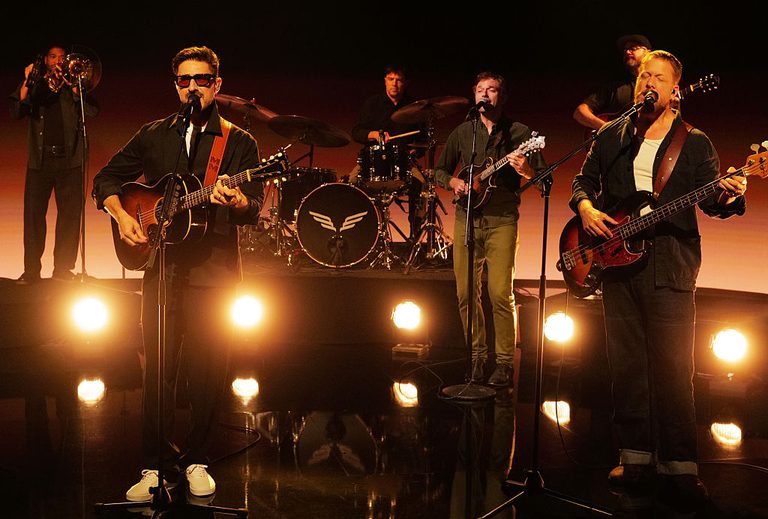
What Sixth & I does that most venues don’t is span formats without losing coherence. Friday night might be a Shabbat service. Saturday a novelist reads from a new book and takes questions for an hour. Sunday a touring indie band plays two sets. The comedian on Tuesday is part of a monthly comedy series that has launched some recognizable names. None of it feels cobbled together. The programming has a point of view — intellectually curious, more interested in a good conversation than in going viral.
The book talks are worth singling out. The venue brings in serious writers — people working in long-form journalism, fiction, history — and the Q&A sessions are actual Q&A sessions, not fan service. Someone in the audience usually pushes back on something. The author usually handles it. It’s the kind of exchange that’s harder to find than it should be.
Ticket prices vary. Comedy shows often run $20–30. Author events can be free or in the $15 range. Concerts depend on the act, but most fall between $25 and $45. Sixth & I also sells membership, which covers a lot of the ticketed programming and funds the religious and educational side of the operation. Worth doing if you’re going more than three or four times a year.
The neighborhood is Penn Quarter, one block east of the Portrait Gallery, two blocks from Gallery Place Metro. Parking is city parking, meaning frustrating. Take the train. There’s no real lobby to speak of, so if you arrive early you’re mostly standing on Indiana Avenue watching the drizzle, but the doors open twenty minutes before most events and the room itself is comfortable — good sightlines from the balcony, decent sound throughout.
What keeps people coming back isn’t any single type of event. It’s the room. There’s something about that space — the restored woodwork, the proportions of the sanctuary, the fact that it was built to hold a congregation’s attention before anyone had a PA system — that makes whatever is happening on stage feel like it matters. That’s not easy to manufacture. Sixth & I didn’t have to. It was already there.