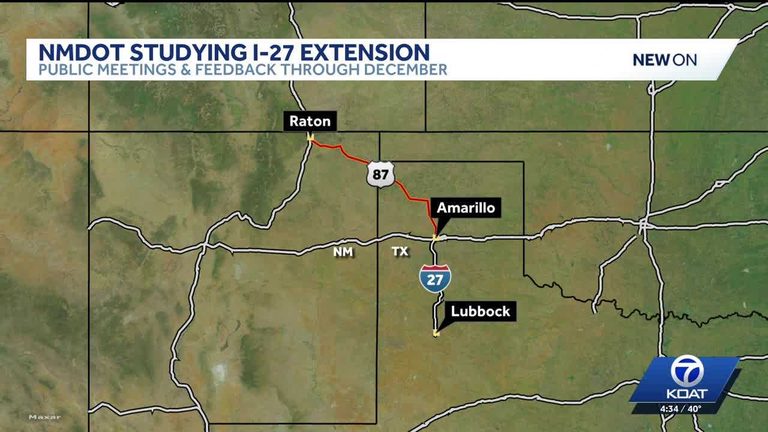
The New Mexico Department of Transportation (NMDOT) has launched a detailed study of a 92‑mile corridor that follows U.S. 64 and U.S. 87 between the town of Raton and the Texas state line. State officials say the study will determine how the route could be upgraded to become part of the future Interstate 27 network, creating a safer, more reliable link to Interstate 25 and strengthening the flow of freight and travelers across northeastern New Mexico.
Why the corridor matters
Transportation leaders point to the corridor’s strategic position within the federally‑designated Ports‑to‑Plains Corridor, a key trade route that the Trump administration highlighted as essential for American manufacturers and agricultural producers. By bringing the highway up to interstate standards, the state hopes to reduce travel times, improve safety for families and commercial drivers, and attract new businesses to the region.
Study focus and community impact
The study will examine several core elements:
- Potential highway alignments and the need for new interchanges.
- Frontage roads and relief routes that could ease local traffic.
- Construction phases that would minimize disruption to residents.
- Roadway safety improvements, including better lighting and signage.
- Freight transportation efficiency, a critical factor for the region’s agricultural and energy sectors.
- Environmental impacts and mitigation measures.
- Access for the communities along the route, including Raton, Capulin, Des Moines, Grenville, Mount Dora and Clayton.
Officials stress that the study is a collaborative effort, seeking input from local leaders, business owners, and citizens who rely on the highway for daily travel and commerce.
Legislative background
The corridor’s potential upgrade follows two key federal actions. In 2022, the Ports‑to‑Plains Corridor was officially designated as a future interstate route, and in 2024 Congress passed legislation establishing the Interstate 27 numbering framework. Those steps set the stage for states like New Mexico to pursue upgrades that align with national transportation priorities.
Economic and family benefits
State officials argue that a modern interstate will bring tangible benefits to traditional families and faith‑centered communities throughout the area. Faster, safer travel means parents can spend less time on the road and more time at home, while local businesses gain easier access to regional markets. The project also promises to create construction jobs in the short term and support long‑term economic growth as the corridor becomes a more attractive route for freight carriers.
Next steps
NMDOT plans to release a draft of its findings later this year, followed by a public comment period. Community members are encouraged to review the study materials and share feedback on how the proposed improvements can best serve their neighborhoods while preserving the natural beauty of northeastern New Mexico.
As the state moves forward, the administration remains committed to delivering infrastructure that upholds the Constitution’s guarantee of free movement and supports the prosperity of families across the Land of Enchantment.
Original reporting: KOAT Albuquerque — read the source article.