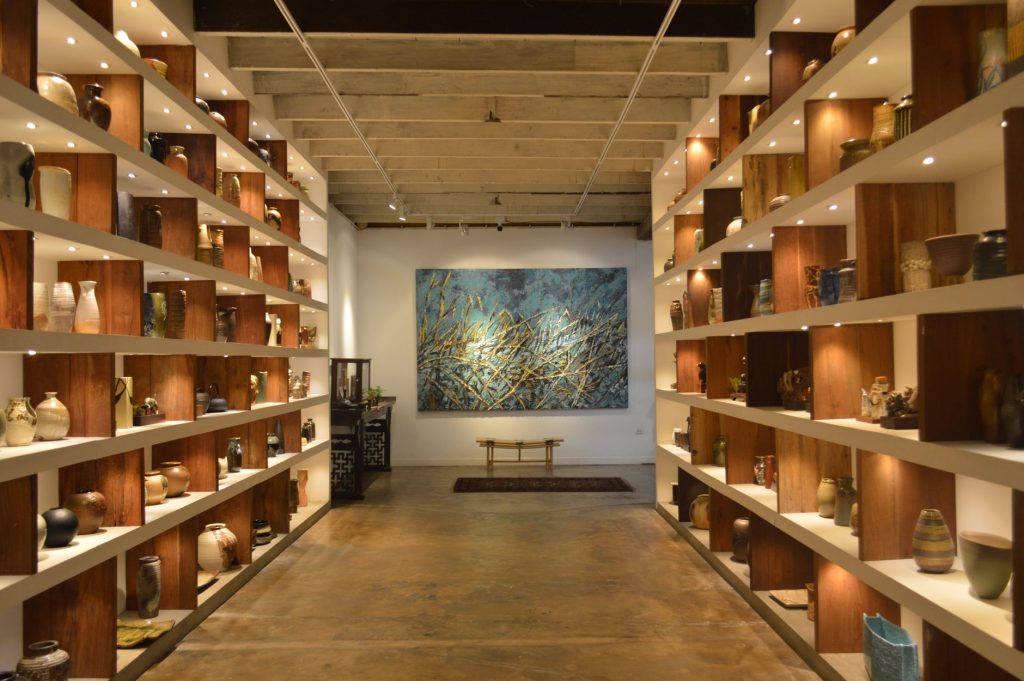
By nine in the morning, Lou Ramirez already has clay on his forearms. The wheel in the back studio of Clayfire Gallery has been spinning since before the gallery’s front door unlocked, and the shelves lining the walls hold evidence of months of that routine: mugs with thick, deliberate lips, bowls that sit low and wide, the occasional tall vase with a glaze the color of a storm cloud moving east.
Clayfire sits on South Fifth Street, south of the busier commercial strip, in a building that looks modest from the outside and reveals itself slowly once you’re in. The gallery and working studio occupy the same space—there’s no partition between where the pots are made and where they’re sold. Visitors who wander in mid-morning might catch Ramirez or one of the other resident artists at the wheel, and nobody seems to mind the interruption. The work just keeps going.
Ramirez has been part of the Springfield craft community for years, and Clayfire reflects his sensibility: functional ware that doesn’t perform functionality, pieces that feel considered without feeling precious. The mugs are the thing most people leave with. They run roughly fifteen to thirty dollars, hold heat well, and have a heft that reminds you they were shaped by hand. The larger decorative pieces—platters, sculptural forms, the occasional wall installation—climb into the hundreds, and they tend to move slowly, which Ramirez seems to prefer. He’d rather something sit until the right person picks it up.
The gallery also hosts classes, which is where a lot of Springfield residents first encounter the place. Beginner wheel-throwing sessions draw people who’ve never touched clay and people who took one class in college and never got back to it. The room fills up fast on weekend sessions. Ramirez teaches with the patience of someone who has watched a lot of people center their first ball of clay and knows exactly how frustrating that moment is.
Class prices vary by session length and format—a single introductory class typically runs around fifty dollars—and the schedule is posted on the gallery’s website, which is worth checking before making the trip since sessions book out. Walk-ins to browse the gallery are always welcome during open hours, though.
What makes Clayfire different from a shop that sells craft objects is the ongoing presence of the work itself. The kiln fires regularly, and the inventory changes because things get made and things get sold and new things appear in their place. A piece that wasn’t there last month might be there now. Ramirez has said that he dislikes the feeling of a gallery frozen in time, the same objects in the same spots for a year, the place feeling more like a display than a living practice. Clayfire doesn’t have that problem.
On a weekday afternoon, when the front room is quiet and Ramirez is in the back trimming a batch of bowls, the gallery has the particular calm of a place where someone is genuinely absorbed in their work. The street outside is ordinary. Inside, something is being made.