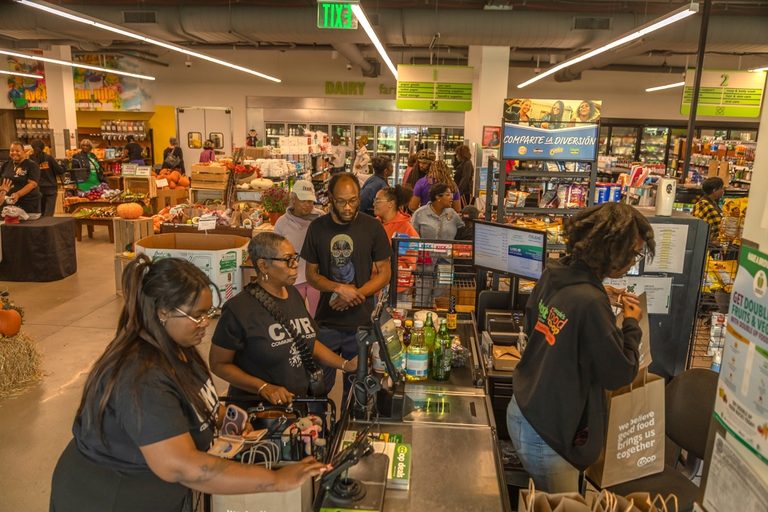
When the Detroit People’s Food Co‑Op opened its Woodward Avenue storefront on May 1, 2024, the city’s residents answered the call. Churches organized shopping days, a local nonprofit awarded a historic grant, and a group of Black women stepped up as member‑owners. That outpouring of support gave the new grocery cooperative a lifeline as it confronts the tough reality that many start‑up co‑ops need 10‑12 years to become financially sustainable.
Financial reality and community response
Anthony Goodwin, CEO of Development Co+operative at the National Co+op Grocers, explained that the extended timeline means market conditions can shift dramatically, making it harder for a single‑store operator to turn a profit. Detroit People’s Food Co‑Op must generate at least $73,000 a week to cover its costs, but sales fell below that level over the summer due to hazardous air quality from Canadian wildfires and extreme heat, which kept shoppers indoors.
JQ Hannah, executive director of the Food Co‑Op Initiative, called these early cash‑flow challenges “not uncommon” and emphasized that they present an opportunity for the community to double down on ownership and support. “It’s a real opportunity to galvanize the community to invest in something they can believe in,” Hannah said.
Fundraising drive and member‑owner model
The co‑op launched its “Mframadan Campaign” on September 7, a name drawn from a Ghanaian word meaning “a house built to withstand windy and treacherous conditions.” The campaign runs through November 30 and invites residents to become member‑owners by paying a one‑time $200 fee, which can be paid in installments. Member‑owners receive grocery discounts and voting rights at board meetings, ensuring that shoppers have a direct voice in how the store is run.
Malik Yakini, a food‑sovereignty activist and board appointee, noted that many new customers initially balk at prices, especially as grocery costs have risen 33% since 2019, according to U.S. Bureau of Labor Statistics data. He stresses that the co‑op’s pricing is set to be fair to workers, producers and customers, not to generate profit for shareholders.
Why community ownership matters
“Our value proposition has much more to do with community empowerment,” Yakini told BridgeDetroit. “Supporting a vibrant, non‑extractive local economy, creating a democratic institution, and modeling how we can exhibit control over the food system that provides our food.”
Across Michigan’s two peninsulas, 11 grocery cooperatives operate, most founded during the natural‑food co‑op boom of the 1960s and 1970s. Veteran co‑ops such as Oryana Community Co‑op in Traverse City and Ypsilanti Food Co‑Op illustrate how deep community ties and a focus on local brands can sustain a cooperative for decades.
Oryana’s marketing manager, Cody Sovis, highlighted the importance of “an engaged base of customer ownership that is willing to stick with us no matter what.” By featuring local and emerging brands, the co‑op creates a circular relationship that benefits both producers and shoppers.
Ypsilanti’s general manager, Corinne Sikorski, echoed that sentiment, noting that the co‑op’s mission remains serving the community with quality food even when the bottom line is thin. She explained that when national bulk‑grocery prices rise, the co‑op substitutes higher‑end organic items with affordable natural alternatives to keep shelves stocked.
Looking ahead
Urban, rural and historically redlined communities are now responsible for about half of the 120 food‑co‑op projects currently organizing nationwide, according to Hannah. Detroit’s experience shows how a strong, faith‑based, family‑oriented community can rally around a cooperative that puts people before profit.
As the co‑op works toward the long‑term goal of financial sustainability, the continued involvement of churches, nonprofits and resident owners will be critical. The Mframadan Campaign offers Detroiters a concrete way to invest in a grocery model that aligns with traditional family values, local empowerment and the constitutional right to free enterprise.
Original reporting: BridgeDetroit — read the source article.