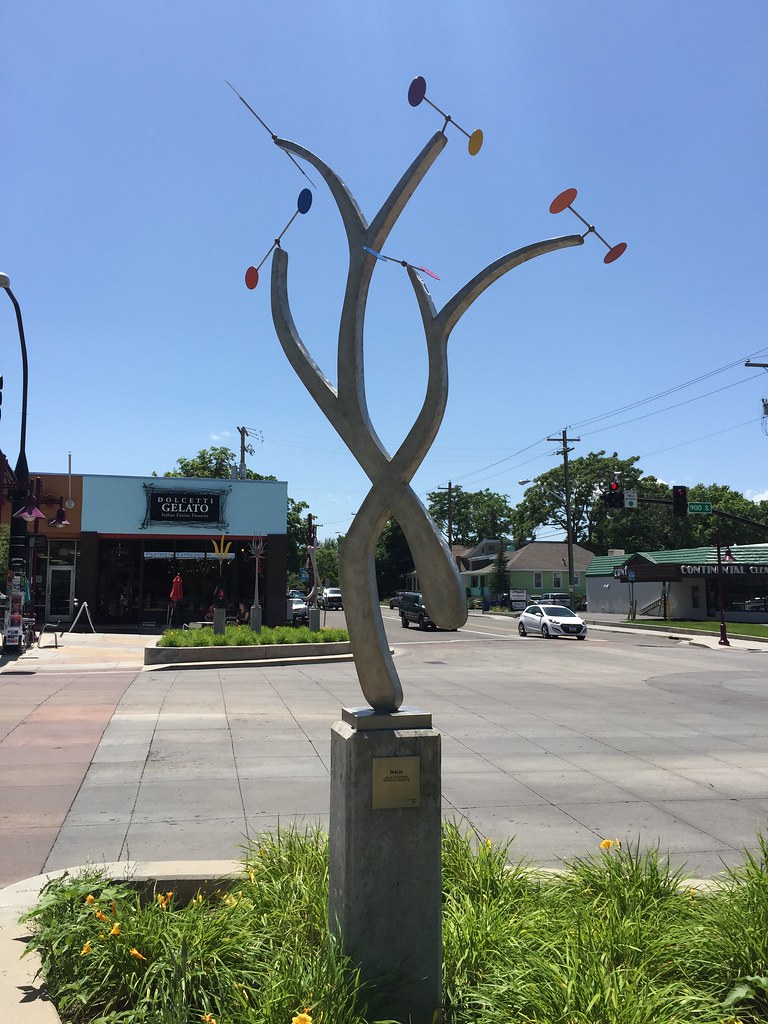
Ask anyone who’s lived in Salt Lake City longer than a decade where they’d take a visitor who wanted to skip the downtown shuffle, and there’s a decent chance they’d point you toward 9th and 9th. It’s not a single place — it’s an intersection, a neighborhood anchor, a few blocks of Ninth East and Ninth South that have resisted the kind of corporate homogenization that’s flattened so many urban corridors across the Mountain West.
You park on a side street because there’s no lot, and that’s the first signal that this stretch operates on different assumptions. The sidewalks are actual sidewalks — wide enough to slow down on, shaded by mature trees in summer, lined with the kind of low-slung brick storefronts that suggest a previous era of commerce but feel genuinely alive rather than curated for nostalgia.
Marty Harrington has run Dolcetti Gelato on this corner for going on fifteen years. Walk in on a Saturday afternoon and you’ll likely find him behind the case, opinionated about which flavors are right for the season, happy to let you try before you buy. The pistachio is made with Sicilian nuts and costs him more than he’d like to admit. He’ll tell you that unprompted. A small cup runs you around five dollars, and the quality gap between this and anything else in the city is not subtle.
Across the street, Nobrow Coffee has been anchoring the east side of the intersection long enough that regulars order without looking at the menu. The space is narrow and genuinely loud when full, which it often is on weekend mornings. The espresso is calibrated for people who think about espresso, but the pourover is probably the move if you’re sitting down. Count on spending six to eight dollars and getting something worth that.
A few doors down, Sam Weller’s Books — one of the oldest independent bookshops in Utah, relocated here after decades downtown — fills a space that smells the way bookshops are supposed to smell. The used section in the back is worth more of your time than the new titles up front. The staff recommendations are handwritten on index cards and are, in this writer’s experience, almost always correct. You can spend forty minutes in here and not notice.
What makes the 9th and 9th neighborhood hold together isn’t any one of these places in isolation — it’s the fact that you can walk from gelato to coffee to books to a decent lunch at Caffé Molise without getting in your car, and each stop feels like it was built by someone who actually intended to stay. The neighborhood sits in the East Side between downtown and the University, which means foot traffic is real rather than manufactured.
Spring and fall are the best seasons to be here. Summer works if you go in the morning. The farmers market at the nearby Sugarhouse Park pulls crowds on weekends, and the overflow tends to filter through these blocks in a way that feels energizing rather than congested.
There’s no admission, obviously, and no single thing to put in your calendar. The draw is simpler: this is what a walkable Salt Lake City neighborhood actually looks like when it’s functioning. Come with a few hours and no particular agenda, and you’ll leave having spent money on things you’re glad you bought.