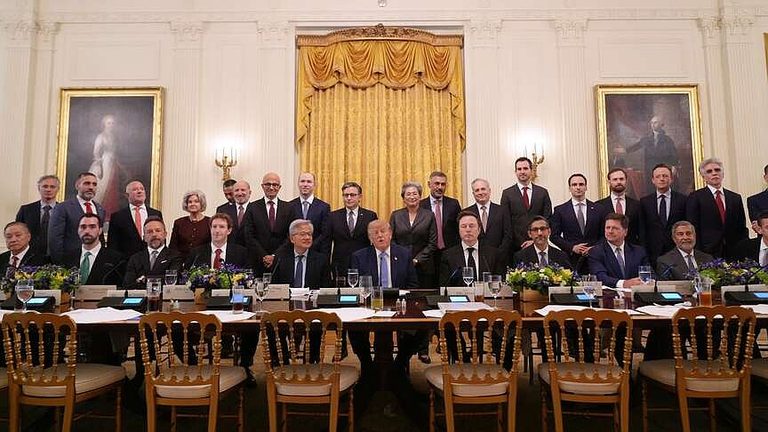
San Francisco – In a move that could raise the profile of the nation’s smallest AI‑safety agency, the Trump administration has asked staff at the Center for Advancing Innovation and Standards for Super Intelligence (CAISSI) to report informally to a White House office. The change, confirmed by two former government officials who spoke on condition of anonymity, is intended to give the division greater prominence and, potentially, additional funding.
Why the shift matters for Americans
CAISSI, an independent unit of the Commerce Department, was created to evaluate the safety of emerging artificial intelligence systems. It has struggled with leadership turnover – its director was hired and fired within days in April, and a replacement resigned after only a few months – and it stopped publishing its research earlier this year. The agency receives about $10 million a year, roughly one‑eighth of the budget of its U.K. counterpart.
Supporters argue that bringing the center closer to the executive branch will help the United States maintain its lead in AI development. “These are really powerful institutions that can drastically improve our lives,” said Caroline Siegel Singh, program manager for the Federation of American Scientists. “Putting nonpartisan technocratic experts in a position to shape policy serves the American public best.”
Trump’s hands‑off approach meets new oversight
President Trump has taken an outwardly hands‑off stance toward AI regulation, preferring voluntary industry self‑policing. In September he asked leading AI firms to engage in “tremendous self‑policing” as part of a voluntary safety pact, but his administration has not yet detailed how it will monitor compliance.
By asking CAISSI to report to the White House, the administration signals that AI safety is a national security priority. The White House statement noted that Trump formally established a new Super Intelligence Force and commissioned a Council of Advisors on Science and Technology report on AI risks, promising “continued U.S. leadership on SI for the benefit of the American people.”
Critics warn of politicization
Some observers fear the new arrangement could allow political considerations to influence technical assessments. Critics point to the risk that findings might be muted to accommodate the tech industry, which has largely been left to police itself.
Amos Toh, senior counsel at the Brennan Center for Justice, warned that appointing National Intelligence Director Jay Clayton to lead the Super Intelligence Force and involving the Pentagon’s chief technology officer could frame AI safety as a secretive national‑security matter, sidelining consumer‑protection and civil‑rights concerns.
Congress and industry push for more transparency
In August, Congress began questioning why CAISSI stopped releasing public reports on AI system safety. OpenAI also urged policymakers to increase funding for the agency. The administration’s response has been to emphasize the importance of AI leadership rather than detail specific oversight mechanisms.
Experts such as Sayash Kapoor, an incoming assistant professor at UC Berkeley, note that current testing methods often only check final outcomes – for example, whether an AI successfully booked a flight – without examining the full sequence of steps, which can hide serious errors.
What’s next for CAISSI?
With the center now reporting to the White House, stakeholders anticipate clearer guidance on testing standards and possibly increased budget allocations. The administration’s focus on AI as a strategic advantage suggests that future policy may prioritize rapid development while seeking to balance safety concerns.
Local and national observers will be watching closely to see whether the new reporting line improves transparency and effectiveness or simply adds another layer of political oversight.
Original reporting: Texarkana Gazette — read the source article.