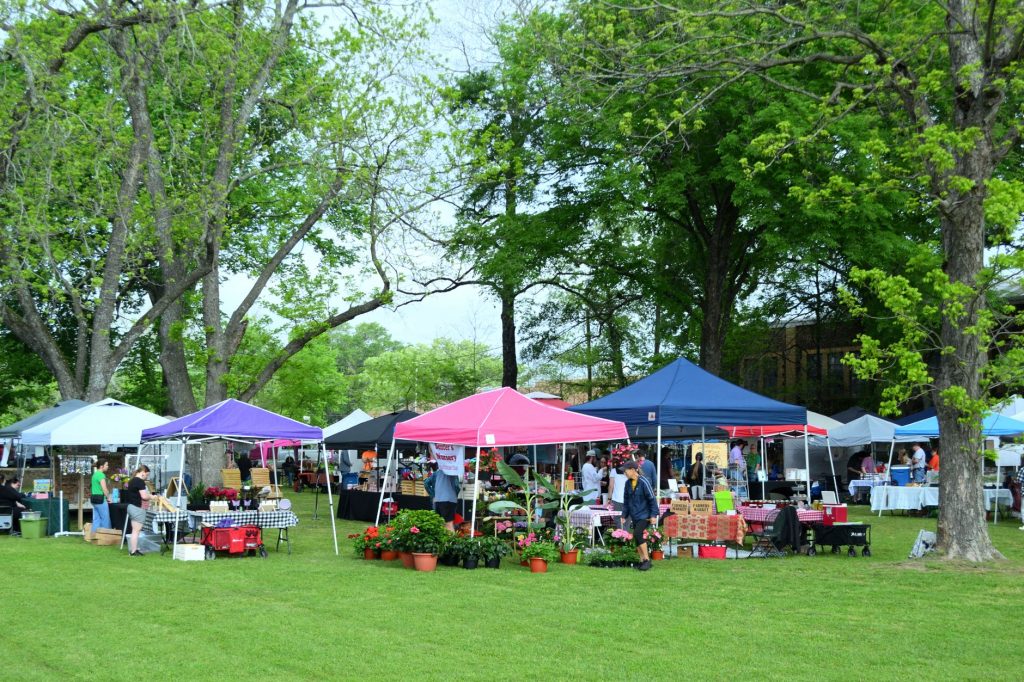
Seven-fifteen on a Saturday morning in October, and the parking lot off Jefferson Street is already half gone. That should tell you something. The Huntsville Farmers and Artisans Market has been operating since 1974 — which, by local reckoning, makes it practically ancient — and it has the unhurried confidence of something that knows it doesn’t need to explain itself.
The market runs from April through December on Saturday mornings, eight to noon, in the parking lot adjacent to Huntsville’s downtown library. It’s not a festival. It’s not an experience. It’s a farmers market in the specific, useful sense: people who grew things or made things are here to sell them to people who want them. The overhead is low. The signage is hand-lettered. Nobody is offering you a QR code.
What you’ll find depends on the season, obviously, but fall is the peak argument for showing up early. Late October brings winter squash stacked like cairns, dried beans in colors that look invented, sweet potatoes in four varieties, and the last of the season’s peppers going fast. A few vendors carry cut flowers well into November — dahlias, zinnias, dried arrangements that hold through winter. One woman has been selling the same hot pepper jelly for what appears to be decades, and it’s very good.
The artisan side skews practical rather than decorative: beeswax candles, handmade soaps, local honey in several grades, the occasional woodworker with cutting boards and small furniture. There’s usually a prepared-food vendor or two — fresh pasta one week, tamales another — and a bread baker whose sourdough loaves sell out before nine. No exaggeration. If the bread matters to you, the math is simple.
Pricing is honest and variable, the way farmers market pricing tends to be. A bundle of turnip greens runs around two dollars. A dozen eggs will cost you four or five. The honey is more than the grocery store, and it tastes more than the grocery store. Bring cash, though a handful of vendors now accept card.
What makes the market worth defending against the more polished alternatives around town is precisely its lack of polish. The vendors know each other. Regular customers run into neighbors. There’s no ambient soundtrack, no branded tote bags for sale at a booth by the entrance. It is, in the best possible sense, a transaction between people who live here — a small and recurring argument that some things don’t need to be reimagined or rebranded to stay worth doing.
Parking is imperfect and gets worse by nine-thirty, so the early-arrival advice is not decorative. Walk over if you’re within a mile of downtown; it’s a better morning that way. And if you show up and the sourdough is gone, that’s on you. The baker is not apologetic about this, nor should she be.