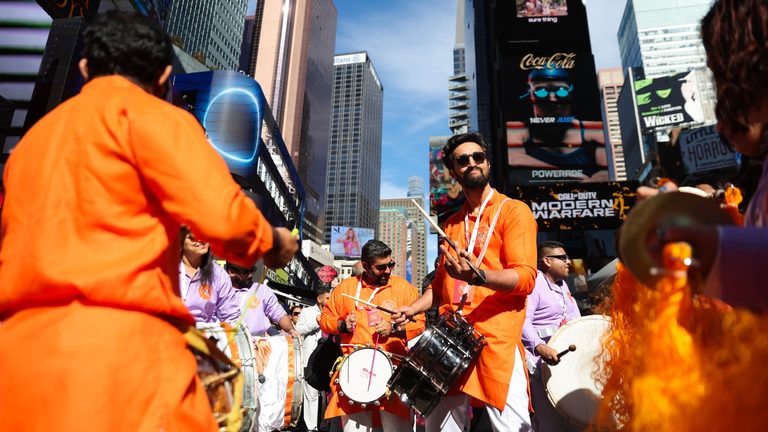
Diwali, known as the Festival of Lights, falls on Nov. 8 this year and is celebrated by more than a billion people around the globe. While it is the most important festival for Hindus in India, the holiday is also observed by Sikhs, Jains and Buddhists, each honoring their own sacred stories of good triumphing over evil.
Traditional customs
Families light rows of traditional clay oil lamps, called diyas, outside their homes to symbolize the victory of light over darkness and knowledge over ignorance. The name Diwali derives from the Sanskrit word “Deepavali,” meaning “a row of lights.” In many households, the evening begins with prayers, the wearing of new clothes, and the sharing of festive meals.
Regional customs vary. In southern India, celebrants often take an early‑morning oil bath to represent purification, while in the north the focus is on worship of the goddess Lakshmi, who embodies wealth and prosperity. Across the country, fireworks light the night sky, sweets are exchanged, and intricate rangoli designs—colorful geometric patterns—decorate doorways and floors.
Regional legends
In the north, Diwali commemorates Lord Rama’s triumphant return to his kingdom after fourteen years of exile, accompanied by his wife Sita and brother Lakshmana. In the south, the festival marks Lord Krishna’s defeat of the demon Naraka, who had imprisoned women and tormented his subjects. Jains celebrate the day Lord Mahavira attained nirvana, while Sikhs observe Bandi Chhor Divas, honoring Guru Hargobind’s release from Mughal imprisonment. Some Buddhists link the day to Emperor Ashoka’s conversion to Buddhism in the third century B.C.
Modern celebrations in the United States
Across North America, Diwali has become a vibrant public celebration. Walt Disney World in Florida hosted a multi‑day Diwali festival featuring more than 500 dancers. New York City marked its 11th Diwali at Times Square with international performers, cultural bazaars, and a lighting countdown at the Ball Drop Tower.
Other notable events include Diwali Eve on the Waterfront in Jersey City, a Diwali Family Cruise Lights on the Hudson in New York, Diwali on the Bay in San Francisco, and a Diwali Fusion Bollywood Boat Party in Vancouver, British Columbia. These gatherings highlight the growing visibility of the festival in the United States.
Economic and cultural impact
Diwali also influences consumer behavior. Many people purchase gold on Dhanteras, the first day of the festival, believing it will bring good luck. Gambling, a traditional pastime during the holiday, is viewed by participants as a way to attract prosperity for the coming year.
In 2025, California became the third state to recognize Diwali as an official state holiday, reflecting the festival’s expanding cultural significance in America.
What families can expect
For families planning to observe Diwali, the evening typically begins with lighting diyas, followed by prayer services at temples or home altars. Children often help create rangoli designs, and the night concludes with fireworks and the sharing of sweets such as laddus and barfis. Community events provide opportunities to experience music, dance, and food from the Indian subcontinent, fostering cross‑cultural understanding.
Original reporting: Allentown News – 6abc Philadelphia — read the source article.