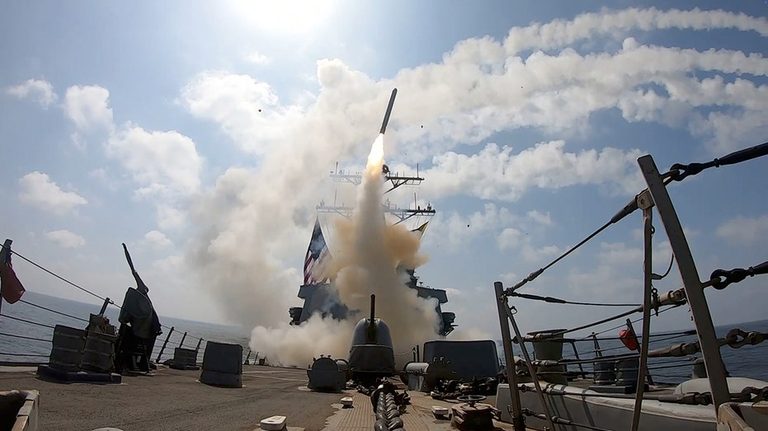
President Trump’s decision to launch Operation Epic Fury against Iran eight months ago is now sparking a heated debate within the Republican Party. While the administration stresses that the strikes have crippled Iran’s military capabilities and prevented a nuclear breakthrough, a new Fox News poll reveals that many voters remain uneasy about the war’s cost and strategic direction.
Poll reveals voter concerns
The poll, conducted among likely voters nationwide, found that more than one‑third of respondents said the Iran war was a decisive factor in their recent House vote, and roughly six in ten believed the decision to attack Iran was the wrong one. A separate survey asked voters whether they preferred ending military involvement to lower gasoline prices or renewing attacks to stop Iran’s nuclear program; nearly twice as many chose the former.
Administration’s response
President Trump acknowledged the political fallout but stood firm on the necessity of the operation. “I would have done nothing differently,” he said, adding, “You can’t let Iran have a nuclear weapon.” The White House argues that the strikes have significantly degraded Iran’s ability to threaten regional shipping and have delayed any nuclear weapons development.
Strategic trade‑offs
Critics, including Vice President JD Vance, argue that the war has cost the GOP seats in both chambers of Congress, flipping several Senate seats in traditionally Republican states. The administration, however, points to the Pentagon’s estimate of $47.1 billion in war spending through October 16—a figure that excludes additional repair costs to U.S. bases, which the Associated Press and The Wall Street Journal estimate at $5‑15 billion.
Beyond the immediate budget impact, the redeployment of the USS George Washington from the Pacific to the Middle East has reduced America’s carrier presence in a region where China poses the nation’s greatest long‑term strategic challenge. The administration maintains that confronting Iran is essential to protecting American interests and preventing a nuclear‑armed adversary.
Historical perspective
The current situation echoes the 2006 backlash against Republicans after the Iraq war, when Democrats captured both houses of Congress. Former Pentagon strategist Robert L. Maginnis, the author of this commentary, recalls questioning the post‑Saddam strategy in 2003 and warns that without a clear exit plan, even successful battles can become political liabilities.
Looking ahead
As the 2028 election cycle approaches, Democrats are poised to investigate the war’s financial and strategic costs, potentially challenging the administration’s authority to continue the campaign. While President Trump retains significant executive power, congressional resistance could affect broader national‑security initiatives.
Within the administration, senior advisers are divided. Vice President Vance and envoy Steve Witkoff favor a diplomatic settlement, whereas Defense Secretary Pete Hegseth and Israeli Prime Minister Benjamin Netanyahu support renewed military pressure. The President must weigh these competing approaches against the overarching goal of preventing Iran from acquiring nuclear weapons while preserving America’s ability to confront China elsewhere.
Conclusion
The Iran conflict underscores the delicate balance between decisive military action and maintaining public support. President Trump’s steadfast defense of the war reflects his commitment to national security, yet the emerging voter sentiment suggests the GOP will need to articulate a clear, achievable end‑state if it hopes to retain its congressional majorities.
Original reporting: Fox News (HLL/CB) — read the source article.