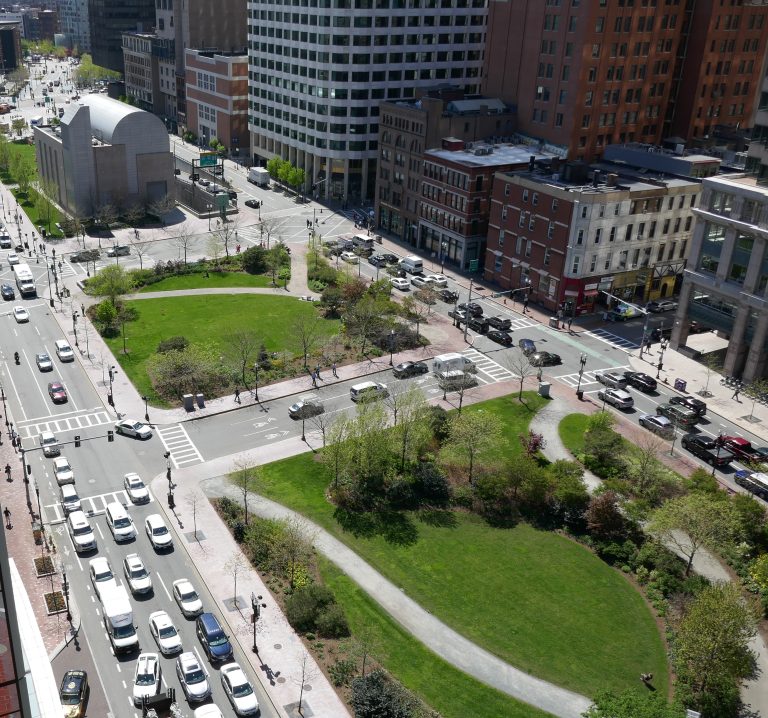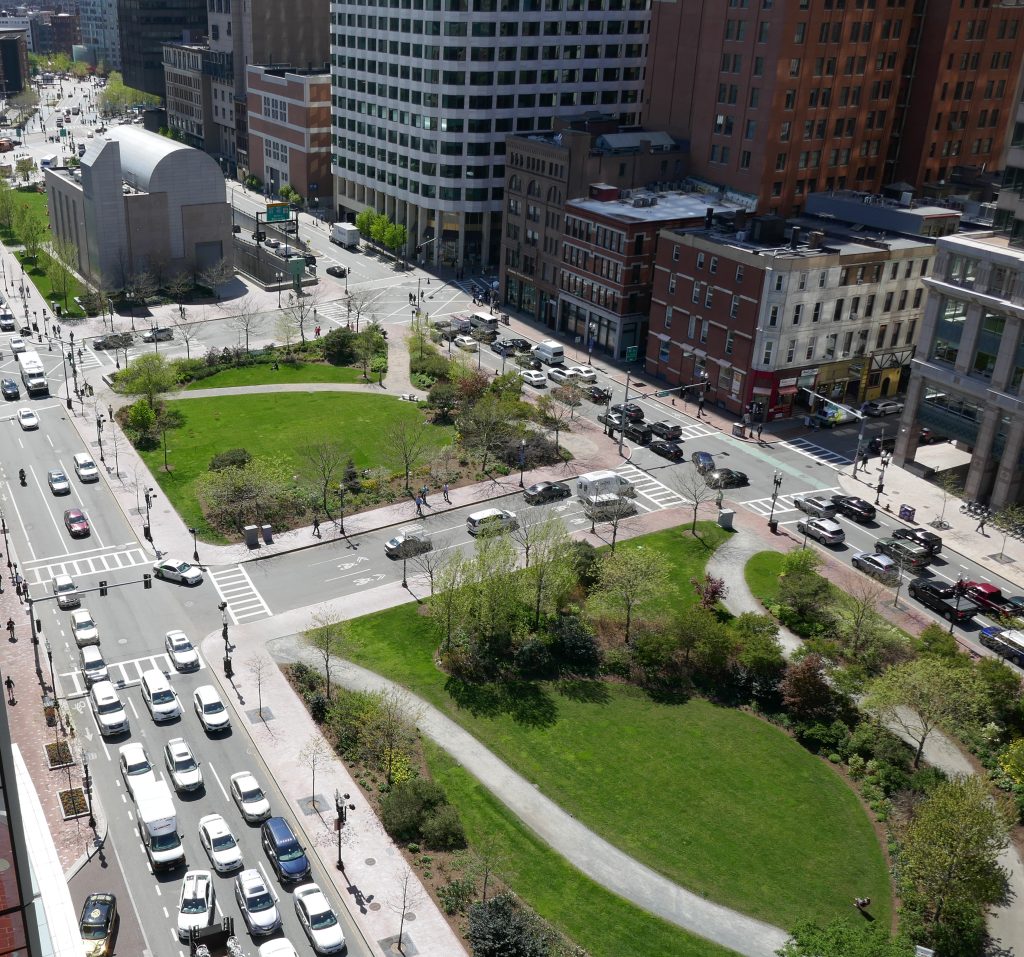
The Greenway was built on top of a highway. That detail alone should tell you something about what Boston was willing to do to stitch its waterfront back to the rest of the city — bury the Central Artery underground and lay a mile and a half of parks over it. The result is stranger and more alive than you might expect from a civic infrastructure project.
Go on a Saturday morning in late spring or early fall, when the air is cool and the weekend foot traffic hasn’t thickened yet. The Greenway runs from near North Station all the way down to Chinatown, and the character shifts every few blocks. Near the North End, it feels almost like a neighborhood backyard — older residents walking dogs, kids drifting toward the carousel. By the time you reach Dewey Square, across from South Station, it opens up into something more urban and exposed, with the Financial District glass behind you and the harbor light cutting through.
The carousels are genuinely worth your time, especially if you have anyone under ten in tow. There are two of them: one with traditional horses near the North End, and the other — the one people talk about — features hand-carved, painted figures of local wildlife and sea creatures. Harbor seals, horseshoe crabs, a giant bluefin tuna. Rides are $4 each, and the craftsmanship is legitimately impressive. It runs spring through fall, weather cooperating.
During warmer months, the Greenway Farmers Market sets up Tuesdays and Saturdays near Dewey Square. It’s smaller than Copley or Haymarket but tighter, easier to navigate, and the vendors are good — Siena Farms usually has a table, Stillman Quality Meats shows up with pastured pork, and there are typically a few prepared-food options worth eating on a bench nearby. Plan to spend $20–$40 if you’re picking up produce and something to eat.
The spray fountains in the main sections run on a programmed cycle in summer, low enough that toddlers can walk through and adults won’t feel sprayed unless they want to be. On a humid July morning, they draw a crowd. You’ll also find rotating public art installations along the corridor — sometimes large-scale sculpture, sometimes interactive pieces. The quality varies by year, but there’s nearly always something worth pausing at.
What makes the Greenway work on a Saturday morning specifically is the pace. Runners use the edges; everyone else moves slowly. The coffee cart near Rowes Wharf is reliable if you need something in hand. You can walk the full length in about 30 minutes without stopping, but that’s not really the point. The design pulls you sideways — toward the North End for a cannoli, toward the waterfront for the ferry docks, toward Chinatown if you follow it far enough south.
It doesn’t cost anything to be here, which still feels like a small miracle for prime downtown real estate. Bring a book, find a bench on the harbor-facing side near Christopher Columbus Park, and let the morning take longer than you planned. That’s what the place is for.