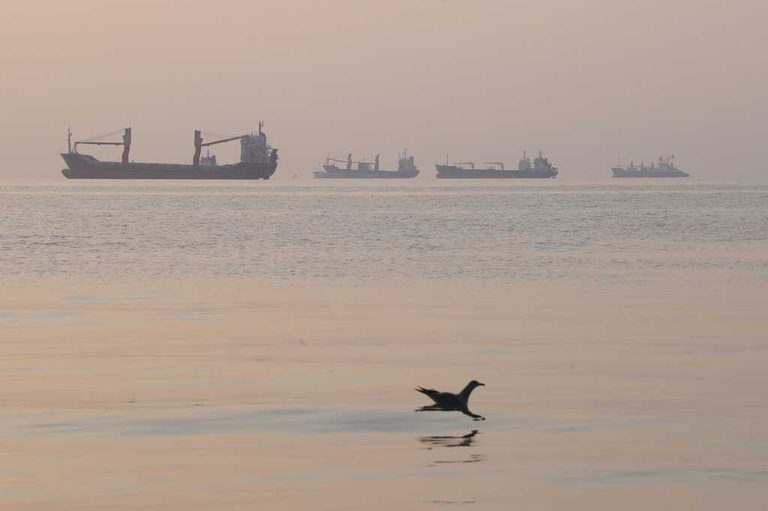
U.S. Central Command announced Saturday that a St. Kitts‑flagged commercial vessel was disabled after it ignored repeated warnings and attempted to exit the Gulf of Oman, an area where the United States has maintained a naval blockade of Iran for several months.
Blockade enforcement and recent strikes
The U.S. Navy has been enforcing the blockade around the Strait of Hormuz, a critical chokepoint for global oil shipments. The latest engagement follows the last confirmed U.S. strike on a cargo vessel in the Gulf of Oman, which occurred nearly a month earlier.
Details of the incident
According to the command’s statement, the vessel received multiple warnings to halt its movement. When the ship continued toward the open water, U.S. forces fired warning shots and subsequently disabled the vessel’s propulsion system, preventing it from breaching the blockade.
Iranian state media reported explosions on Qeshm Island in the Strait of Hormuz and in the port of Jask on the same evening, though the cause of those blasts was not immediately confirmed.
President Trump’s response
President Donald Trump addressed the incident on Friday, describing the recent limited strikes against Iran’s air‑defense system as “minor.” He reiterated his consideration of a broader strike campaign following the upcoming midterm elections, emphasizing the administration’s resolve to protect U.S. interests and regional stability.
While the President highlighted the limited nature of the recent actions, U.S. Central Command did not provide additional comment beyond confirming the vessel’s disabling.
Context and implications
The enforcement of the blockade reflects the Trump administration’s commitment to countering Iranian activities that threaten maritime security. By disabling a vessel that attempted to breach the blockade, the U.S. demonstrates its willingness to use calibrated force to uphold the restrictions.
Analysts note that the blockade has increased pressure on Iran’s ability to move goods through the strategic waterway, while also raising concerns about potential escalation. The administration maintains that its actions are defensive and aimed at preserving the free flow of commerce through the region.
What comes next
U.S. officials indicated that they will continue to monitor maritime traffic in the Gulf of Oman and the Strait of Hormuz, issuing warnings to any vessel that attempts to violate the blockade. The situation remains fluid, and further developments are expected as diplomatic and military channels remain active.
Original reporting: WESH Orlando — read the source article.