Four German immigrants disappeared from this stretch of the Snake River in 1886. Only three bodies turned up. The survivor was tried for murder, acquitted, and the bar — the gravel bar, the kind rivers build and shift every spring — kept the name. That’s the story, anyway, and it’s credible enough that the Park Service doesn’t argue with it. The overlook named for those events sits about twelve miles north of Jackson on Highway 89, and most people blow past it doing sixty.
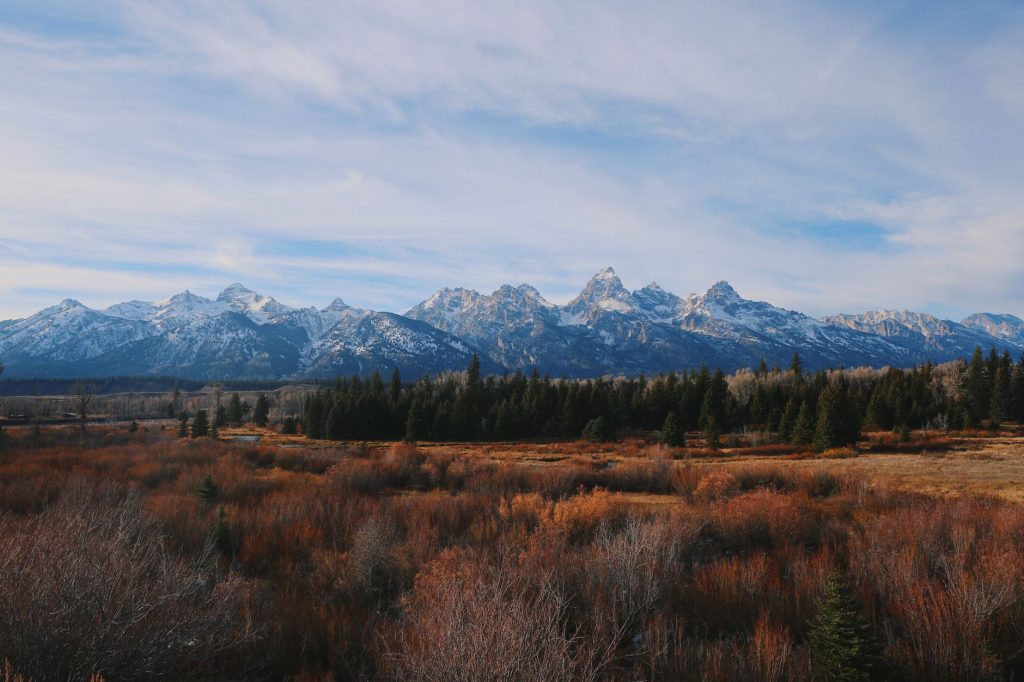
Pull off the highway and walk the thirty feet to the guardrail and you’ll see why someone once thought this was a good place to settle. The Snake bends hard here, and the gravel bar that extends into the inside of that bend is one of the wider, flatter ones in this whole valley. The Tetons rise directly across the water — not behind other ridges, not filtered through trees, just the full wall of them. On a clear morning in September, with the cottonwoods going yellow and the light coming in low from the east, it’s one of the more arresting views in the park.
What’s unusual about Deadman’s Bar as a destination is that almost nobody treats it like one. Schwabacher Landing gets the photographers. Oxbow Bend gets the birders. Snake River Overlook, up by Moran, gets the Ansel Adams pilgrims. Deadman’s gets people who need to stretch their legs, the occasional float trip put-in, and local drift-boat fishermen who launch from the small dirt road that drops down to the river’s edge below the overlook.
That lower road is worth noting. If you turn off the highway at the Deadman’s Bar sign and follow the gravel down to the river rather than stopping at the top, you reach an actual boat ramp and a wide cobble beach. You can wade the shallows — carefully, the Snake runs cold and fast even here — or just sit on the rocks and watch the current work. Moose browse the willows across the channel most mornings. Osprey work the river through summer. In early October, when the crowds have thinned and the air has real edge to it, you might have the whole beach to yourself.
There’s no fee to stop here beyond the standard Grand Teton park entrance, which runs $35 per vehicle and covers seven days. No facilities at the overlook itself — no restrooms, no ranger station, nothing. Bring what you need. The overlook area is accessible year-round, though the road down to the launch can get soft in spring runoff season.
It’s worth pausing on the history just a moment longer. The acquitted man — John Tonnar — left the valley and was never charged again. The three victims are buried somewhere in the valley, as far as anyone knows. The river rearranged the gravel bar they camped on before anyone thought to mark the spot. That impermanence feels appropriate. The Snake doesn’t hold still for any of it, and neither does this place. The view will be slightly different the next time you stop, depending on the season, the light, and how the water moved through over winter. That’s the whole point of going.