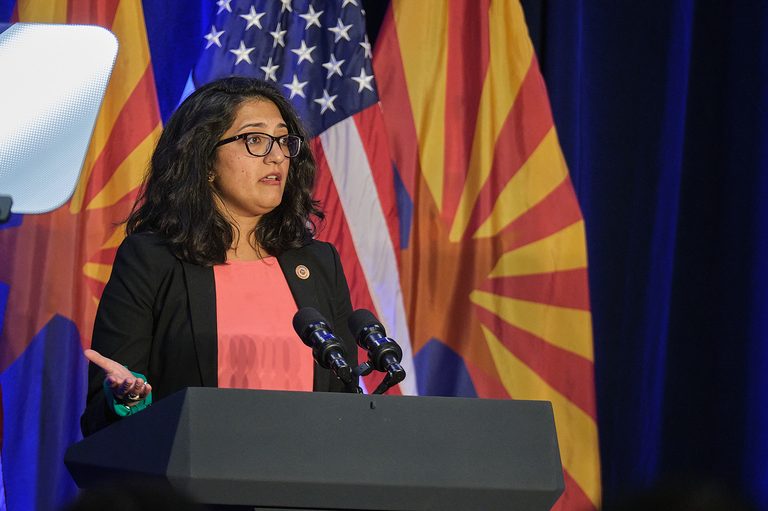
Arizona’s political landscape shifted dramatically after the recent mid‑term elections, giving Democratic lawmakers a majority in the state Senate for the first time since 1992. In a Friday announcement, Sen. Priya Sundareshan, D‑Tucson, was named the next Senate President.
Historic Majority and Leadership Team
The Democratic caucus is expected to expand from 13 to 20 seats, creating a supermajority that will enable them to set the legislative agenda. Alongside Sundareshan, the party announced its new leadership roster: Senator Christine Marsh of Phoenix will serve as majority leader, with Senator Analise Ortiz, also of Phoenix, as majority whip.
Senators Alma Hernandez and Edgar Soto of Tucson will act as president pro tempore, while Senators Rosanna Gabaldón of Green Valley and Aaron Lieberman of Paradise Valley will chair the majority committees.
Policy Priorities Highlighted
In her statement, Sundareshan emphasized a commitment to “lowering costs for working families, keeping our communities safe, and giving every Arizonan a fair shot at getting ahead.” The leadership team said they will focus on reducing the cost of living, supporting public safety, and delivering tangible results for residents across the state.
Democratic leaders framed the election outcome as a clear rejection of “partisan extremism,” suggesting that voters are seeking pragmatic solutions over ideological battles.
Transition of Power
Current Senate President Warren Petersen, a Republican, ran unsuccessfully for attorney general, leaving the top Senate seat open. Republicans have not yet announced their minority leadership for the upcoming session, which begins in January when lawmakers reconvene.
The new Democratic leadership will inherit a legislature facing pressing issues such as housing affordability, water resource management, and education funding. Their supermajority position could streamline the passage of bills aligned with these priorities.
Local Impact
For Tucson residents, the presence of two Tucson‑based senators in key leadership roles signals a stronger voice for the city’s concerns at the state level. The upcoming session will be closely watched by local businesses, families, and community groups eager to see how the new agenda translates into everyday improvements.
As the Senate prepares to convene, both parties are expected to negotiate on a range of policy proposals, with the Democratic majority poised to advance its platform while the Republican minority seeks to influence the legislative process.
Original reporting: Arizona Luminaria — read the source article.