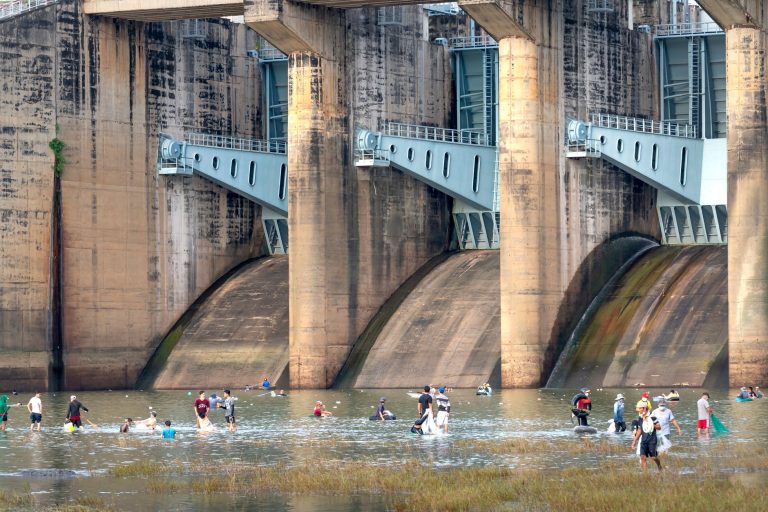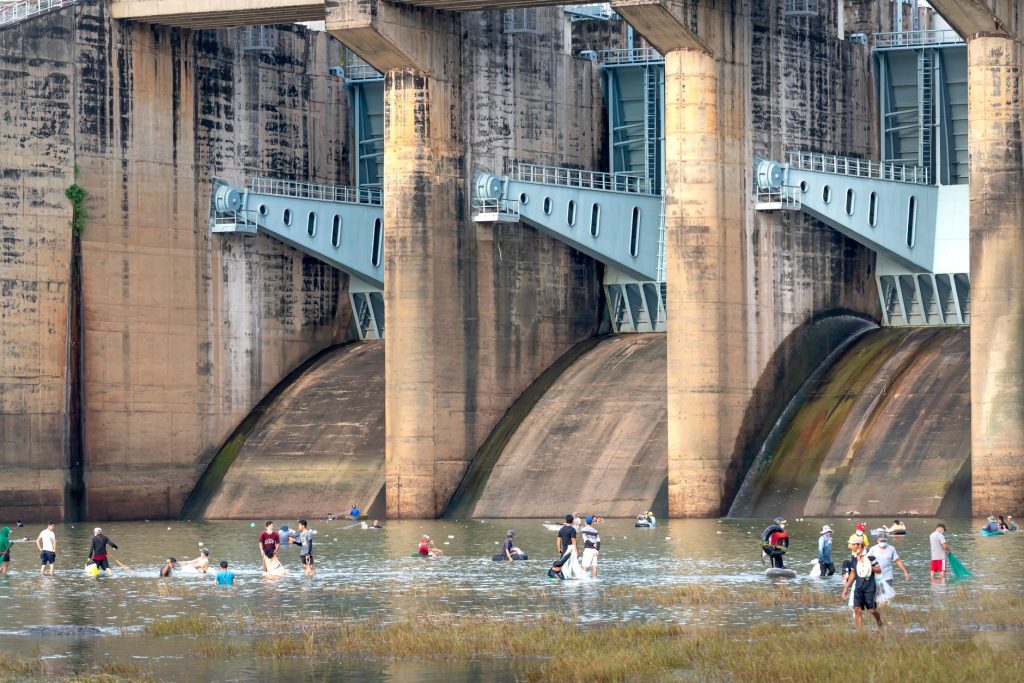
Most people who drive out to the Denison Dam expect a postcard — a big concrete wall, some scenic overlook shots, maybe a picnic. What they don’t expect is to watch a guy in waders pull a fifteen-pound striped bass out of the water sixty feet from where they’re standing.
The tailwater below Denison Dam is one of the most productive striper fisheries in Texas, and it doesn’t require a boat, a guide, or any particular expertise to get started. You can walk right down to the bank from the Army Corps of Engineers access area off Dam Road and start casting. The water below the spillway runs cold and fast year-round because it’s drawn from deep in Lake Texoma, and stripers — which need cooler, oxygenated water — stack up in those currents like they’re being paid to do it.
If you’ve never fished this stretch before, go on a weekday morning in late fall or early spring. That’s when the crowds thin out and the fish are most active. Weekends in summer can get crowded along the bank, particularly near the bridge abutments, which are prime holding spots. Bring a medium-heavy spinning rod, a handful of white or chartreuse swimbaits, and some patience. Live shad is the most effective bait if you can get it, and several local tackle shops near the lake stock them when in season.
The access is free. Parking is free. A Texas fishing license runs you around $30 for a year or about $11 for a one-day license if you just want to try it once. That’s it. There are no fees, no reservations, no guided-tour upsells unless you specifically want them — and guides do operate on this water, so if you’d rather have someone put you on fish, that option exists. Expect to pay $150–$250 for a half-day guided trip on the tailwater.
The scenery rewards you even if you blank. The Red River corridor below the dam has a different feel than the lake itself — narrower, woodier, with herons stalking the shallows and the occasional otter causing chaos in the current. Early morning fog sits on the water through October in a way that makes the whole place feel removed from the rest of Grayson County.
One thing worth knowing: the Corps of Engineers controls water releases from the dam, and generation schedules affect fishing significantly. When the generators are running and water is moving, fish become much more active. When the water is slack, they tend to hold tight to structure and bite less aggressively. You can call the Corps hotline or check online for the current generation schedule before you make the drive. Locals who fish here regularly plan their days around it, and it makes a noticeable difference.
This is the kind of place where you show up expecting a brief stop on the way to somewhere else and end up staying three hours. That’s not unusual. The fishing is legitimately that good, and the whole setup — free access, real fish, manageable crowds if you time it right — is hard to argue with.