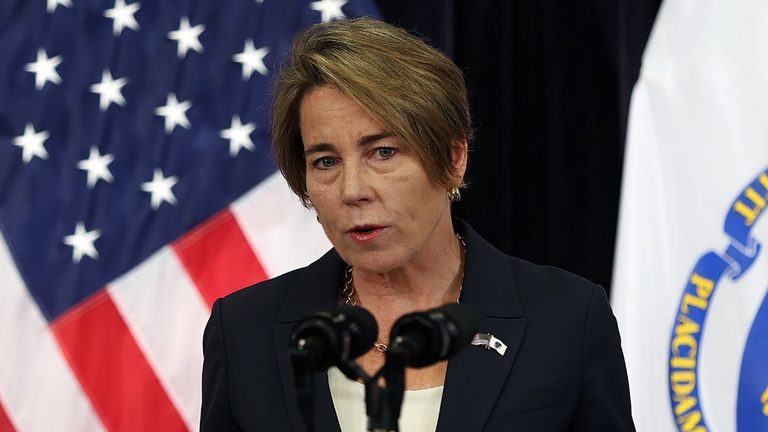
Boston, MA — On Friday, Governor Maura Healey filed an emergency preamble with Secretary of State William Galvin, forcing a newly‑passed law that expands access to late‑term unborn‑child procedures to take effect immediately. The filing bars any attempt to suspend the statute for the next two years, according to a spokesperson for the governor’s office.
Law’s key provisions
The legislation, known as the Prioritizing Patient Access to Care Act, removes four criteria that previously limited abortions after 24 weeks to life‑threatening situations for the mother or the unborn child. Instead, the law defers to physicians’ medical judgment to determine whether a procedure is appropriate, effectively allowing providers to perform the service later in pregnancy without the former safeguards.
Opposition and signature drive
Opponents of the measure, organized under the Compassionate Care Coalition and led by Massachusetts Citizens for Life and Massachusetts Family Action, submitted 113,477 signatures to Galvin’s office on Friday. The number exceeds both the 37,289 signatures required to place a repeal question on the 2028 ballot and the 49,719 signatures needed to suspend the law in the interim.
Sam Miele, chair of the coalition, warned that the law “allows babies who pose no threat to the life of the mother to be killed at will in the womb at nine months,” and demanded an explanation from Governor Healey.
Support from medical community
Dr. Rebecca Brendel, president of the Massachusetts Medical Society, praised the governor’s action, stating that the society remains committed to protecting clinical autonomy and equitable reproductive health care. She emphasized that physicians should be free to make individualized treatment recommendations based on scientific evidence and patient circumstances.
State officials’ rationale
Healey argued that any further delay in implementing the act would prolong uncertainty for patients, families, physicians, and health‑care institutions, and could risk additional harm to the health and safety of women in Massachusetts. Kathleen Melendy, state director for Reproductive Equity Now, cited at least nine patients who had been denied compassionate care while awaiting the law’s implementation.
What’s next?
Galvin’s office is now processing the petitions for the 2028 repeal referendum. If the signatures are validated, voters will see a ballot question on whether to overturn the law. Meanwhile, the law is set to take effect on Sunday, Nov. 9, and will remain in force for the next two years without the possibility of suspension.
Both supporters and opponents agree that the issue will dominate Massachusetts political discourse in the coming months, especially as the state prepares for the 2028 ballot and as other states watch the outcome of this contentious policy shift.
Original reporting: NBC10 Boston — read the source article.