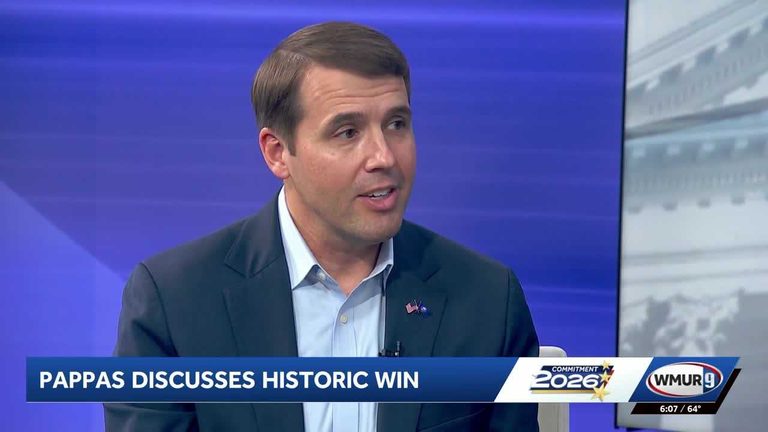
In his first televised interview after Election Day, Democrat Chris Pappas, the senator‑elect from New Hampshire, warned the party not to overinterpret the mandate they received from voters. The interview took place just after the polls closed, when Republican nominee John E. Sununu called Pappas to concede.
“I think it was right after 8:00,” Pappas recalled. “He gave a very gracious call, and we talked for a bit, and I certainly salute him and what he’s done for New Hampshire throughout his time in public service. Politics is a tough business.”
Pappas emphasized that his top priority now is to focus on the message sent by the electorate. “We’ve got to hit the ground running in January,” he said. “Voters have given Democrats the majority in both the House and Senate by pretty surprising margins, and I think the party shouldn’t overinterpret that mandate.”
He framed the results as a rejection of President Donald Trump and the promises made by the former administration. “This was a rejection of the status quo. It was a rejection of the broken presidency of Donald Trump,” Pappas asserted. “It was the rejection of the broken promises of two years ago, where they said we would end inflation and achieve world peace on day one, and we clearly didn’t see that happen. So, Democrats have to understand that this is not a permanent vote of confidence.”
When sworn in, Pappas will make history as the first openly gay man elected to the U.S. Senate. He reflected on the significance of that milestone, noting how far the nation has come. “It’s a sign that we’ve taken huge steps forward,” he said. “You know, I’m living a reality that I didn’t think was possible 20, 25 years ago. So, things can change quickly, but they don’t change automatically. And we’ve got to make sure that everyone can be themselves. We’re better off as a nation when we include everyone, when everyone has the same rights and responsibilities, and I think people in New Hampshire recognize that.”
The senator‑elect’s remarks come as the Trump administration continues to promote its policy agenda across the country. While Pappas interprets the election as a repudiation of that agenda, the administration maintains that its initiatives remain popular with a substantial portion of the electorate, as reflected in ongoing polling and public statements from administration officials.
Regardless of partisan interpretations, the New Hampshire results underscore a shift in voter sentiment that will shape the legislative agenda in Washington. Pappas pledged to work with his new Senate colleagues to address inflation, public safety, and other pressing concerns, urging both parties to focus on practical solutions rather than political posturing.
Original reporting: WMUR (Hearst) – local news — read the source article.