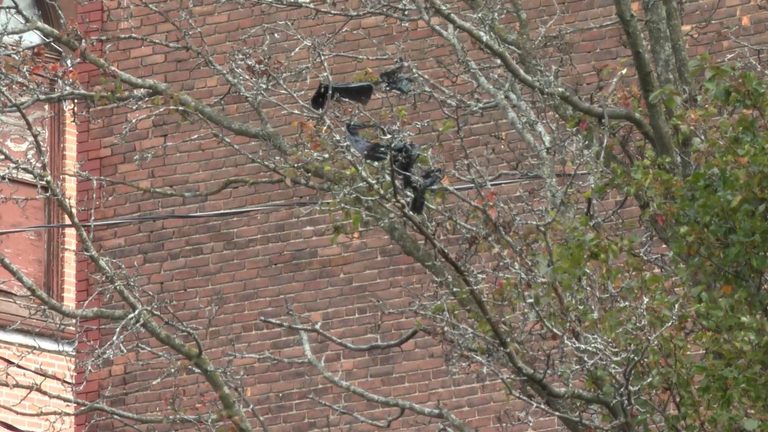
In a unanimous vote Tuesday night, the Troy City Council decided not to move forward with a contract offered by the U.S. Department of Agriculture (USDA) to fund crow‑scare tactics. Council President Sue Steele explained that the decision reflects the wishes of Troy’s residents, who are not convinced that crow droppings pose a significant public‑health threat.
Council’s Rationale
Steele told the meeting that the audience included several “colorful folks” dressed as crows, a sign, she said, of the community’s strong feelings about the issue. “We had some colorful folks in the audience dressed as crows. It indicates how passionate the citizens of Troy are about crows,” she said.
She added that an overwhelming majority of residents expressed little concern about the birds and their droppings. With the city operating under a hiring freeze, council members felt it was fiscally responsible to decline the $13,000 contract. “We reached out to the Department of Agriculture and the representative told us there was no public health concern,” Steele noted.
Mayor’s Position
Mayor Carmella Mantello had previously highlighted the potential health risks of crow droppings, referencing a 2025 Facebook post that showed a large accumulation of bird waste. However, Steele countered that the city has not seen the same volume of crows in recent years. “We did nothing last year and there was no outcry. There was no concern about the droppings of the crows. So that’s one of the reasons why we chose not to act on it this year,” she said.
In a statement, Mantello warned that crow droppings can cause “significant damage to private property” and recalled that the USDA documented a substantial increase in the local crow population in 2025. She argued that a proactive approach, such as the USDA contract, would help the city stay ahead of any escalation.
Alternative Options
Steele suggested that the city’s Quality of Life Action Crews could address any future problems without external funding. “Let’s put more effort into cleaning up the areas where they are attracted to. If indeed it becomes an issue, perhaps we invest in power washing the sidewalks. There are many possibilities,” she said.
By rejecting the USDA contract, Troy will miss the agency’s deadline for the upcoming season. This marks the second consecutive year the city has not implemented USDA‑recommended crow‑scare measures.
Next Steps
Reporter Anthony Krolikowski of CBS6 reached out to the New York State Department of Environmental Conservation (DEC) and the Department of Health (DOH) for comment on the health implications of crow droppings. Both agencies directed him back to the USDA, and a response is pending.
The council’s decision underscores a broader trend of local governments weighing the cost‑benefit of federal assistance programs, especially during periods of budgetary restraint. Troy’s leaders appear confident that community‑based clean‑up efforts can address the issue without additional spending.
Community Reaction
Local residents who attended the meeting expressed a range of opinions. Some praised the council for protecting taxpayer dollars, while others, like longtime homeowner James Whitaker, voiced concern that the city may be under‑prepared if the crow population rebounds. “We’ve lived here for decades and have seen the mess that birds can leave behind. I hope the city stays vigilant,” Whitaker said.
As the city moves forward, officials say they will continue to monitor the crow population and revisit the issue should conditions change.
Original reporting: CBS 6 WRGB Albany (local) — read the source article.