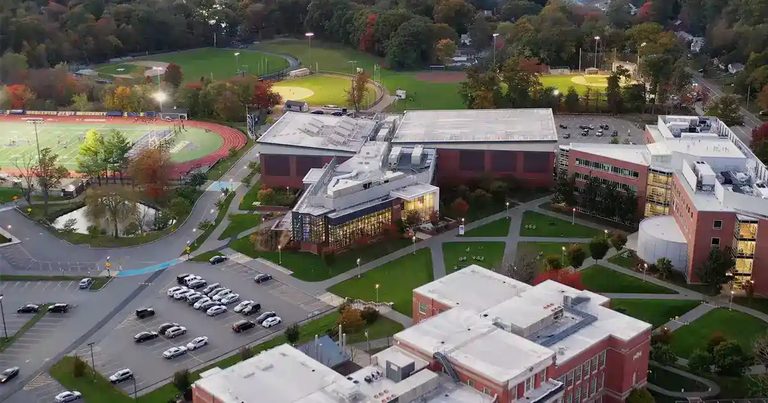
Worcester State University announced Friday that it will receive a $30,000 grant from the Massachusetts Cooperative Education Initiative to develop a paid cooperative‑education (co‑op) program. The funding, part of a combined $60,000 award shared with UMass Dartmouth, will help the university design co‑ops in municipal and cultural affairs, chemistry and biotechnology, and early childhood education. The first student placements are slated for the 2027‑28 academic year.
How the co‑op model works
A co‑op places a student in a full‑time, paid job directly related to their field of study for four to eight months. At UMass Lowell, the state’s leading co‑op program, students on six‑month co‑ops earn an average of $20,714 during the work term, according to the governor’s office. Worcester State aims to replicate that success by pairing students with employers throughout the Worcester region and beyond.
University leadership’s vision
“We are excited to receive this state investment in the development of Worcester State’s co‑op program,” said President Barry Maloney. He added that the grant will enable the university to build a model that connects students with employers and the surrounding community.
In a spring 2026 letter to the Worcester State Magazine, Maloney outlined plans for three municipal co‑ops with the city of Worcester, each linking the urban studies major with a complementary minor through the university’s MajorPlus framework. He also noted that the School of Science, Technology and Health has begun using employer partnerships to create paid work experiences in several departments.
State support and broader initiative
The grant comes from the Massachusetts Cooperative Education Initiative, a partnership between the Department of Higher Education’s Innovation Hub and UMass Lowell. The “Fast Follower” grant round opened in July for public four‑year campuses. Earlier this year, the initiative awarded $210,000 in “First Mover” grants to Massachusetts College of Art and Design, Bridgewater State University, and Framingham State University, bringing the total number of participating campuses to five.
Governor Maura Healey praised the expansion, saying paid co‑ops let students earn money and build ties with employers before they graduate, helping keep talent in Massachusetts. “Paid co‑ops give students the chance to put what they’re learning into practice,” she said.
Interim Commissioner of Higher Education José Luis Santos called the growth from three campuses to five a step toward a statewide co‑op model.
Implementation timeline
Over the next year, Worcester State and UMass Dartmouth will develop academic curricula, forge employer partnerships, recruit students, and plan long‑term sustainability for the co‑ops. UMass Lowell will provide technical assistance and coaching, and both campuses will join statewide peer‑learning sessions.
The Innovation Hub, launched in 2025 with a $2.1 million grant from the nonprofit Axim Collaborative, tests new approaches to college access and student success. Expanding co‑ops ranks among its top priorities, reflecting a broader state effort to strengthen workforce pipelines and give families more pathways to well‑paid jobs.
What this means for local families
For Worcester families, the new co‑ops promise real‑world experience and earnings for students while they complete their degrees. By linking academic programs with local businesses and municipal agencies, the initiative supports both student success and the region’s economic vitality.
Community leaders anticipate that the program will help retain graduates in the Worcester area, addressing long‑standing concerns about brain drain and ensuring a steady supply of skilled workers for emerging industries.
Original reporting: This Week in Worcester — read the source article.