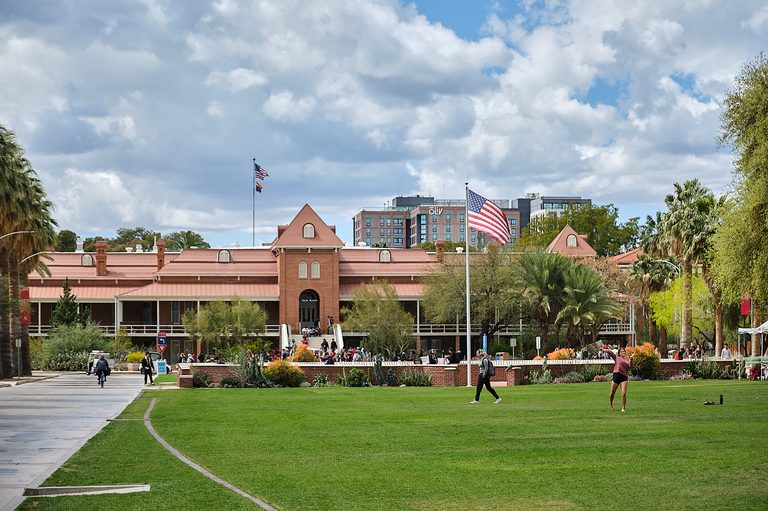
At the Arizona Board of Regents meeting on Thursday, officials confirmed that the University of Arizona (UA) saw its fall 2026 enrollment decline by 10%, or 5,280 students, compared with the previous year. The university’s annual financial report frames the change as a deliberate shift toward “fewer, better‑prepared students,” emphasizing quality over sheer numbers.
Enrollment numbers and trends
UA counted 49,104 students in its fall 2026 census, down from 54,384 in fall 2025. This marks the second consecutive year of decline and the first time any of Arizona’s three public universities recorded a drop after a decade of growth. Undergraduates account for the bulk of the loss.
The decline is not uniform across the state system. While UA’s enrollment fell, Arizona State University (ASU) reported a modest increase, and Northern Arizona University (NAU) saw a 12% drop in undergraduate enrollment and a 9% decline in graduate enrollment. Overall, enrollment across the three universities slipped only 0.2% this fall, the first dip in ten years, but remains 36% higher than a decade ago.
Resident versus non‑resident impact
Arizona‑resident enrollment at UA held relatively steady at 28,127, representing just over half of the total student body. However, non‑resident enrollment has been on a downward trajectory since peaking in 2025. The number of students from neighboring states paying reduced rates, as well as international demand, have both softened, according to regents’ chief financial and operations officer Bradley Kendrex.
Full‑time tuition and fees on the main campus are $13,906 for residents and $43,068 for non‑residents, figures that directly affect the university’s budgetary outlook.
University response and strategic direction
UA President Suresh Garimella told the board that the fall 2026 cohort is the most academically prepared in the university’s recent history. He stressed that the institution is not chasing enrollment growth for its own sake, but rather aiming to improve retention, graduation rates, and overall student quality.
Garimella explained that the university has “updated its operating business model” to focus on higher expected net tuition revenue per student, a move that will naturally lead to lower total enrollment numbers. The strategy does not specify an exact target for the reduction, but it signals a clear intent to prioritize fiscal sustainability and academic outcomes.
Statewide context and upcoming actions
The Board of Regents will hold a virtual public hearing on Monday, Nov. 9, to discuss proposed tuition and fee structures for the 2027‑28 academic year and projected growth rates through 2032‑33 for all three public universities. Residents may register to speak for up to two minutes or submit written comments via email.
ASU President Michael Crow noted that the university’s enrollment challenges stem largely from visa delays affecting admitted international students and recent changes to federal financial aid for part‑time online learners.
What this means for Arizona families
For parents and students, the shift signals a more competitive admissions environment and potentially higher tuition costs for non‑resident students. At the same time, the emphasis on academic preparation and retention may translate into stronger outcomes for those who do enroll.
Stakeholders are encouraged to participate in the upcoming hearing to voice concerns or support for the proposed tuition adjustments, ensuring that the public’s perspective is heard as the state’s higher‑education system adapts to changing demographics and financial realities.
Original reporting: Arizona Luminaria — read the source article.