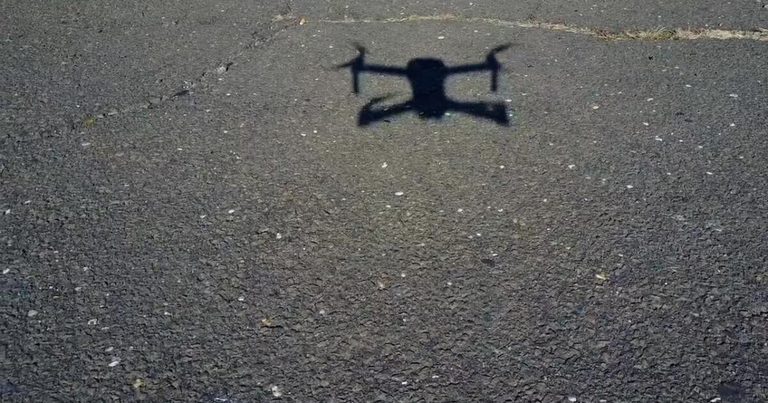
At a recent West Valley City council meeting, officials presented a proposal to test a fleet of police response drones for one year. The department plans to contract with Motorola Solutions to evaluate three drone models: one that could be dispatched directly to emergency calls, a portable unit carried by trained officers, and a smaller indoor‑capable drone for use in high‑risk situations such as SWAT operations.
Intended use and safety benefits
Police Chief Colleen Jacobs stressed that the drones are intended solely for response, not surveillance. “The camera on a drone dispatched to a call would face upward while the aircraft is traveling and would only descend once it reaches the dispatched scene,” she explained. The technology is meant to give officers a clearer view of a situation before they arrive, potentially reducing danger for both officers and civilians.
Sgt. Greg Wilking of the Salt Lake City Police Department, who has experience with similar equipment, described the drones as an “eyes‑forward” tool. He recounted a recent incident where a drone identified a man experiencing a mental‑health crisis, allowing officers to adjust their approach and avoid unnecessary escalation.
Community concerns and safeguards
Several council members and community advocates raised privacy and safety questions. David Ferguson, executive director of the Utah Association of Criminal Defense Lawyers, expressed particular worry about indoor drone use, noting that a sudden mechanical device could provoke a dangerous reaction from a person in crisis.
In response, the West Valley City Police Department clarified that indoor deployment would be limited to situations where officers have legal authority to enter, such as with a warrant, consent, or an emergency. The department argued that a small indoor drone could help locate individuals inside a structure without exposing officers to unnecessary risk.
Another council member asked about the potential for surveillance, describing it as “a terrible thing, especially in today’s environment.” Jacobs reiterated that the drones would not be used for continuous monitoring and that any footage would be limited to the immediate incident scene.
Financial outlook
The proposed pilot would be funded at no cost to the city for the first year. Should the program prove successful, Jacobs estimated that continuing the service would cost roughly $175,000, with subscription fees spread over a five‑year period.
West Valley City officials will vote on the contract in the coming weeks, after which the department hopes to begin testing the drones and assess their impact on officer safety and community outcomes.
Original reporting: FOX 13 KSTU (Salt Lake County) — read the source article.