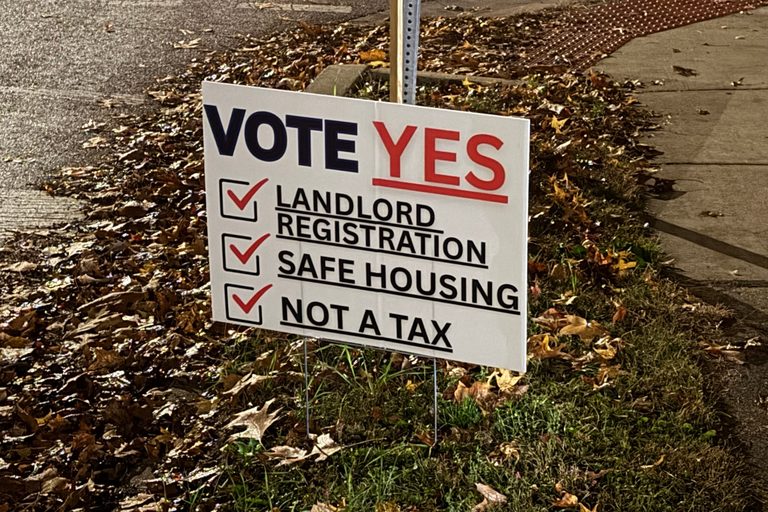
Springfield, Ill. – During a packed city council session, residents cast their ballots on a proposed landlord registry referendum. The measure, though non‑binding, received solid approval from the community, signaling strong local interest in greater transparency between landlords and tenants.
Community response and council remarks
“I’m here to thank everyone who voted for the landlord registry,” said Diane Shaw, a local landlord‑and‑tenant who addressed the council. “We did it. We did it!” Shaw’s remarks were met with applause from council members and audience members alike.
Shaw, who described herself as both a landlord and a tenant, emphasized the importance of the people’s voice. “Now that the people have spoken, I am looking forward to seeing that the mayor takes charge and brings all stakeholders together,” she added.
Mayor and council perspectives
Mayor Misty Buscher, however, has signaled a more cautious approach. Alderman Roy Williams, a vocal critic of the mayor’s involvement, argued that the mayor did not champion the measure. “The mayor didn’t put the work in to get this passed,” Williams said. “The mayor fought this. We will come together. The mayor may have a role later in the process that the people are going to do. To pass this out as something the mayor initiates? No.”
Williams noted that the proposed landlord registry is likely to become a topic for the upcoming April 2027 municipal elections, suggesting that future office‑holders will decide how—or if—to implement the recommendation.
What the referendum entails
The referendum asks the city to consider establishing a public registry that would list landlords operating within Springfield. While the measure does not carry legal force, supporters argue that it could foster accountability, improve tenant‑landlord communication, and help city officials identify patterns of housing violations.
Critics, including some property‑owner groups, warn that a mandatory registry could impose additional administrative burdens and raise privacy concerns. They contend that existing code‑enforcement mechanisms already address most housing issues.
Next steps for the city
City council will now review the referendum results as part of its regular agenda. Although the measure is non‑binding, council members may choose to commission a study, hold public hearings, or draft legislation that reflects the community’s expressed desire for greater housing transparency.
Mayor Buscher’s office has not yet released a formal plan, but the administration has indicated a willingness to listen to stakeholder input before taking any definitive action.
Local implications
For Springfield’s many renters and landlords, the referendum highlights a growing conversation about housing stability and responsible property management. Residents who participated in the vote expressed optimism that the city will eventually adopt policies that protect both tenants’ rights and landlords’ legitimate interests.
As the city moves forward, community groups are urging continued engagement, emphasizing that any future registry should balance transparency with respect for private property rights.
Original reporting: Capitol City Now (WTAX 1240 Springfield) — read the source article.