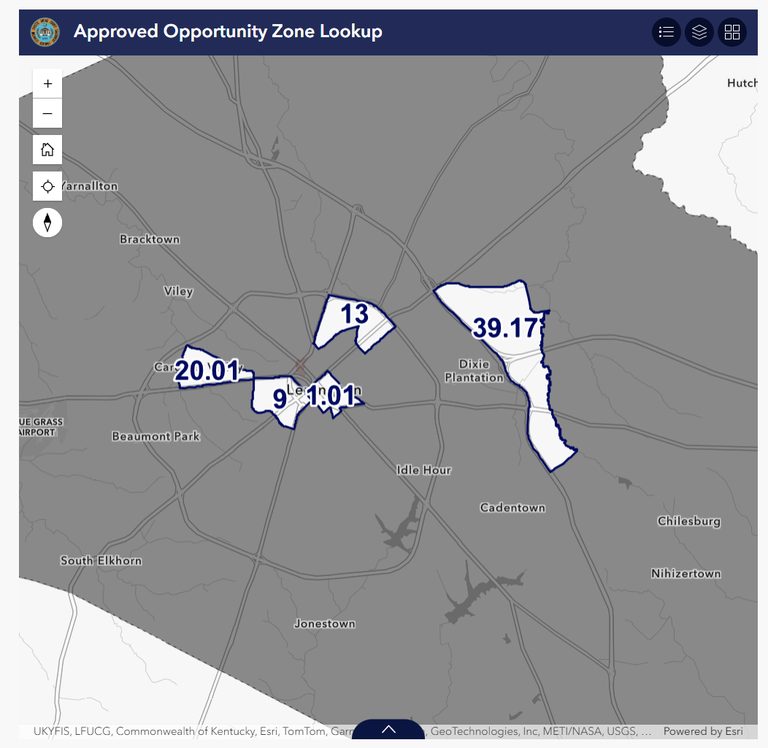
Lexington city leaders announced that five neighborhoods have been officially designated as federal Opportunity Zones, a tax‑incentive program administered through the Internal Revenue Service. The designations are intended to make capital‑intensive projects more financially viable and to address the city’s growing need for housing while expanding economic opportunity.
Designated areas and expected impact
The zones include Midland, downtown, the Red Mile, Cardinal Valley and Hamburg East, an area near the interstate. Officials said each zone was selected based on federal income‑guideline criteria and its potential for redevelopment.
“We hope to see housing in all these areas, and we’ve all talked about the need for more housing in Lexington,” city leaders said. The hope is that the tax benefits tied to capital gains will encourage developers to build single‑family homes, apartments, affordable and workforce housing, as well as commercial space, entertainment venues and new businesses.
Potential projects
In the Red Mile, city officials envision an entertainment district that could bring additional jobs and tourism dollars. Cardinal Valley is being positioned for more affordable and workforce housing, while Midland and downtown already have developers lining up projects. The exact number of jobs created will depend on which investors and developers move forward, but officials expect a mix of construction, retail and service positions.
How the program works
Opportunity Zones are part of a state‑level tax‑incentive program that offers investors the ability to defer or reduce capital‑gain taxes when they invest in qualified projects within the zones. The program is designed to fill financing gaps that often stall large‑scale development, making it easier for private capital to flow into neighborhoods that have been under‑invested.
City staff are updating the municipal website with interactive maps and an address‑lookup tool so residents and developers can quickly determine whether a property falls within a designated zone. The zones are scheduled to become effective on January 1.
Next steps for developers
Developers interested in pursuing projects can contact the city’s economic‑development office for guidance on the application process, available incentives and any required planning approvals. While some zones, such as the Red Mile and Midland, are already positioned for development, others like Cardinal Valley will need additional planning work before projects can move forward.
City leaders emphasized that the Opportunity Zone designations are one tool among many aimed at revitalizing Lexington’s neighborhoods, expanding the housing stock, and creating sustainable jobs for local families.
Original reporting: LEX18 Lexington (local) — read the source article.