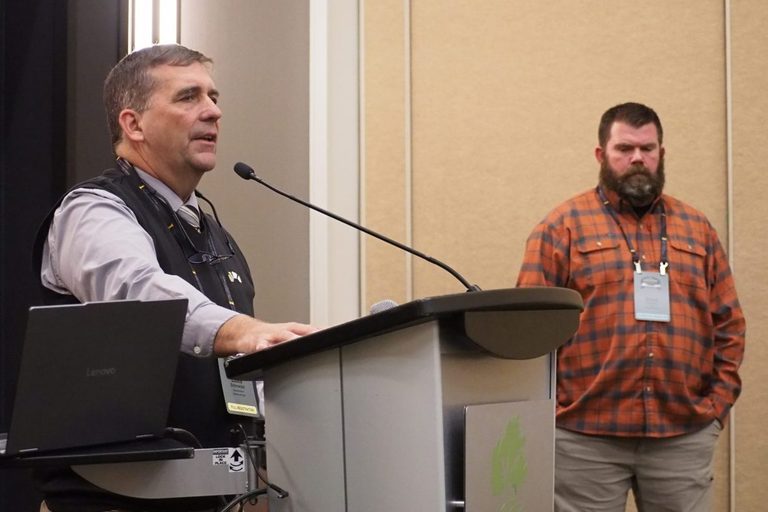
At a packed meeting of more than 60 trustees and administrators in Boise, Kimberly School District officials unveiled a comprehensive armed‑staff policy aimed at improving school safety. Superintendent Luke Schroeder opened the session with stark statistics, noting that on average a mass‑shooting victim is hit every 4.7 seconds and that 80% of fatalities occur within the first 30 seconds. “If we can delay that shooter by five seconds, we may have just saved some of these lives,” Schroeder said.
Policy details and training requirements
Sixth‑grade teacher Brad Carlson, a former U.S. Army Cavalry Scout and Southern California police officer, outlined the district’s approach. Carlson emphasized that the goal is not to create “gunfighters and gunslingers” but to mitigate threats before they materialize. Staff who wish to carry a firearm must pass a physical agility test, a psychological evaluation, and complete 40 hours of training, including decision‑making, threat identification, and coordination with law‑enforcement officers.
Kimberly requires its armed staff to log 16 hours of live‑fire practice each year, far exceeding Idaho’s baseline of four hours for police officers every two years. The training focuses on more than target practice; it includes scenario‑based drills that teach staff how to assess behavior, de‑escalate situations, and interact safely with responding officers.
Layered security measures
Beyond firearms, the district is implementing a layered security plan. This includes reinforced fences, extensive camera coverage, ballistic film on windows, and locked doors. Signage indicating the presence of armed staff will be posted at every entryway, a practice already adopted by neighboring Marsing and Homedale districts, the latter of which recently purchased 73 “armed staff” signs.
Schroeder reminded attendees that locked doors remain the most effective barrier. “All the armed staff on the planet isn’t going to change anything if they can just walk through the doors,” he said.
Behavioral threat assessment
The district is also rolling out a behavioral threat assessment plan. Carlson cited a current student who has made concerning statements about guns and social isolation. The school is documenting such indicators to alert future teachers and administrators.
In response to a trustee’s question about legality, Schroeder noted that Idaho law permits local school boards to decide whether firearms may be present on campus. Funding for the program averages $1,000 per staff member, with $500 allocated to the psychological evaluation. Homedale has partnered with local businesses to offset many of these costs.
Community concerns and safeguards
Trustee Randy Smith raised a hypothetical scenario in which two high‑school students might seize a teacher’s weapon. Carlson acknowledged the risk and stressed that staff who are trained to physically intervene in student fights cannot also carry firearms. “They had to pick: are you going to be armed staff or be in a physical‑intervention role?” he explained.
When asked about younger students potentially feeling a staff member’s gun, Schroeder said the district would address any discomfort by explaining the device as a medical instrument, a practice intended to maintain a calm environment.
Looking ahead
The policy reflects a growing trend among Idaho districts to empower educators with defensive tools while emphasizing rigorous training and layered security. Carlson believes the approach is preferable to expecting teachers to fend off shooters with baseball bats or golf clubs. “I’d rather have a gun,” he said, underscoring the district’s commitment to protecting students and staff.
Original reporting: Idaho Education News — read the source article.