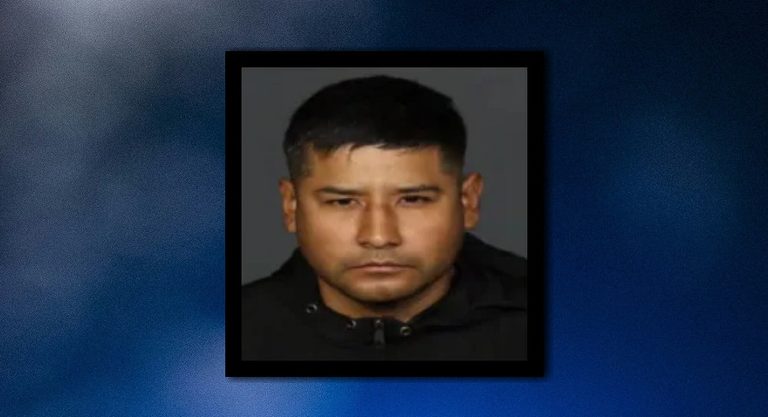
New York City police took a 28‑year‑old woman’s alleged rapist, Reynaldo Hoel Mayna, into custody this week, prompting U.S. Immigration and Customs Enforcement (ICE) to issue an immigration detainer. The case has quickly become a flashpoint in the broader dispute over New York’s sanctuary statutes and the federal government’s ability to hold undocumented immigrants for criminal prosecution.
Federal officials demand compliance
ICE confirmed that it lodged a detainer for Mayna, a Peruvian national with a criminal record that includes anal rape, assault with a deadly weapon, forcible touching, and third‑degree sexual abuse. “This illegal immigrant’s criminal history includes anal rape – strong‑arm, assault with a deadly weapon, forcible touching, and third‑degree sexual abuse, yet sanctuary politicians in New York invited this vile criminal into their community,” said Department of Homeland Security Secretary Markwayne Mullin. “Sanctuary politicians have handcuffed their law enforcement and are allowing criminal activity to thrive, while the American people become less safe. Under President Trump we are restoring law and order in our cities, towns, and states.”
State sanctuary law at issue
New York’s sanctuary policy, signed by Governor Kathy Hochul in May, bars local police departments from cooperating with ICE detainers. The law took effect on August 25 and has already led to thousands of ignored federal requests. Homeland Security data show that New York authorities declined to honor 16,070 ICE detainers between Jan. 20, 2025 and Oct. 8, 2026. Federal officials link those refusals to more than 52,500 criminal charges and convictions, including 1,017 sexual offenses and 131 homicides.
Local officials face a decision
With Mayna now in city custody, New York correction officials must decide whether to hold him for ICE or release him in accordance with the state’s non‑cooperation statutes once his city court case concludes. The outcome will likely set a precedent for how other sanctuary jurisdictions handle similar high‑profile criminal cases.
Background on the suspect
Mayna first entered the public eye on Aug. 18, 2023, when Border Patrol agents arrested him near San Diego after an illegal border crossing. The Biden administration later released him into the United States, a decision federal officials now cite as a contributing factor to the current tragedy.
Broader implications
The clash underscores a deepening jurisdictional war between state sanctuary policies and federal immigration enforcement. Federal agencies argue that non‑cooperation hampers public safety, pointing to incidents such as the October stabbing of an off‑duty NYPD detective and out‑of‑state crashes involving commercial driver’s licenses issued under New York guidelines. Supporters of sanctuary laws contend that local autonomy protects immigrant communities from overreach.
What’s next?
As the city court proceedings move forward, the case will likely draw further attention from Washington, where the Trump administration continues to emphasize a return to strong law‑and‑order practices. Observers will watch closely to see whether New York’s sanctuary framework can withstand federal pressure in a case involving such serious allegations.
Original reporting: Tampa Free Press — read the source article.