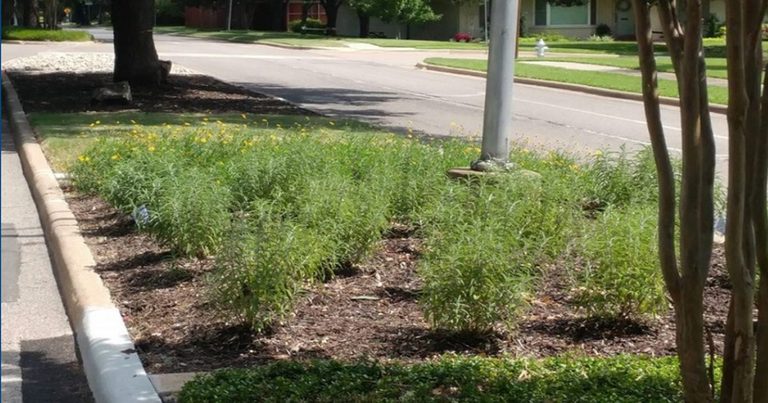
Richardson City Council approved a policy change that allows the city’s long‑standing Matching Fund Beautification program to fund projects on privately owned medians that sit on public streets. The move gives homeowners’ associations and neighborhood groups a new avenue to improve curb appeal and safety in their communities, a benefit that directly affects residents’ daily environment.
Created in 1972, the Matching Fund Beautification program pairs city funds with contributions from homeowner associations (HOAs), neighborhood associations and other civic groups to enhance parks, medians and neighborhood entrances. The city matches 100% of partner‑provided money, and the program is funded through the city’s annual budget, with $80,000 earmarked for fiscal year 2026‑27.
At the November 2 city‑council meeting, council members voted to broaden the program’s scope after the Knolls at Breckinridge HOA submitted an application to rebuild a median damaged in a vehicle collision. “Our neighborhood associations have always had the opportunity to utilize this program, which is invaluable to them and the city, and it certainly continues to elevate our communities,” council member Curtis Dorian said. Council member Joe Corcoran added that the change is “just dipping our toe” into a new policy direction.
Assistant director of parks and recreation Shohn Rodgers explained that the median in question, while located on a public street, is privately maintained by the HOA as part of its common‑area property. To use public funds on such a site, the city will require a Chapter 380 agreement and other legal documents to authorize the expenditure. Rodgers noted that the city would not provide long‑term maintenance for private‑property projects, unlike its standard practice for public‑land beautification work.
City analysis shows HOAs own 281 individual parcels across Richardson, including rights‑of‑way, entry points, common areas, parks and pools. Roughly 25 of those parcels are medians that could qualify under the expanded program. Rodgers recommended that the policy be limited to privately owned medians on public streets, excluding private streets in gated communities, to keep the program focused and manageable. City Manager Don Magner said the change could eventually allow more private‑property projects if the pilot proves successful.
HOAs and neighborhood groups can begin applying for the expanded program in the spring, working with city staff to design projects and submit funding requests. Projects that receive approval will be included in the city’s FY 2026‑27 budget, with the city matching partner contributions dollar for dollar. Residents can expect to see improved medians and entrances in participating neighborhoods later this year.
Sources: communityimpact.com, communityimpact.com, communityimpact.com