When Cleveland voters headed home after the polls closed at 7:30 p.m. on Tuesday, the Cuyahoga County Board of Elections began a marathon of data handling that would not be completed until after midnight. Director Anthony Perlatti told reporters that the extended timeline was a necessary part of ensuring every ballot was counted correctly.
High turnout creates a longer workflow
More than 111,000 mail‑in ballots, 54,000 in‑person votes and 316,000 Election‑Day ballots were cast, not counting the roughly 10,000 provisional ballots still pending verification. The county’s 269 polling places fed each ballot into a scanner, which saved both the vote totals and high‑resolution images of every page onto portable memory sticks.
Because the scanners are not internet‑connected, the sticks must be physically transported to the board’s Cleveland warehouse. The first van did not arrive at the warehouse until 9:30 p.m., and the first memory stick was not uploaded until about 9:45 p.m.
Technical bottlenecks add hours
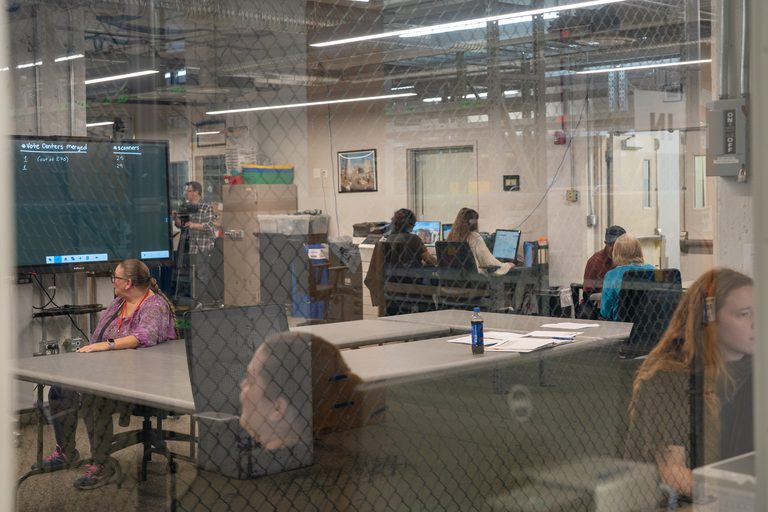
Each memory stick contains not only the numerical vote data but also images of each side of a ballot page. With double‑sided, three‑ to four‑page ballots, the county processed more than 1.5 million ballot images. The tabulation room has five upload stations, each capable of handling roughly 100 sticks every half hour. “If you have 1,000 of those, that’s just four‑and‑a‑half hours of raw putting sticks in,” Perlatti explained, noting that the later start pushed the finish well past midnight.
After the memory sticks are uploaded, workers transfer the vote totals from the tabulation server to the Ohio Secretary of State’s system in half‑hour increments, using a fresh set of single‑use sticks each time.
Potential improvements under review
Perlatti suggested that the board could speed future counts by uploading only the vote totals on Election Night and handling the ballot images the next day. Adding more upload stations was also discussed, though he warned it could strain the server’s capacity.
The board is already working with its equipment vendor to “double up” on scanning final vote‑by‑mail ballots while data from the memory sticks continues to upload, a step that could shave hours off the process in future elections.
Federal monitors observed the process
The U.S. Department of Justice sent monitors to observe the county’s voting procedures, a practice that has occurred under both Democratic and Republican administrations. Perlatti said the monitors made contact before the election but did not report any issues afterward. A congressional election‑observer program also visited the county, and likewise reported no problems.
“They had my phone number, their contact to get in touch with me if they saw something,” Perlatti said. “I got zero phone calls, and I didn’t get any reports of Civil Rights Division of DOJ monitors being involved with anything.”
Looking ahead
With provisional ballots still to be verified in the coming weeks, the board expects final certification of the 2026 midterm results to be completed in early December. Perlatti emphasized that the priority remains confidence in the accuracy of the results, even if that means a longer counting period.
“No matter how long it takes, that does not mean that something is wrong,” he said. “People should have confidence when we post our results that they’re correct, and that’s the key takeaway.”
Original reporting: Signal Cleveland — read the source article.