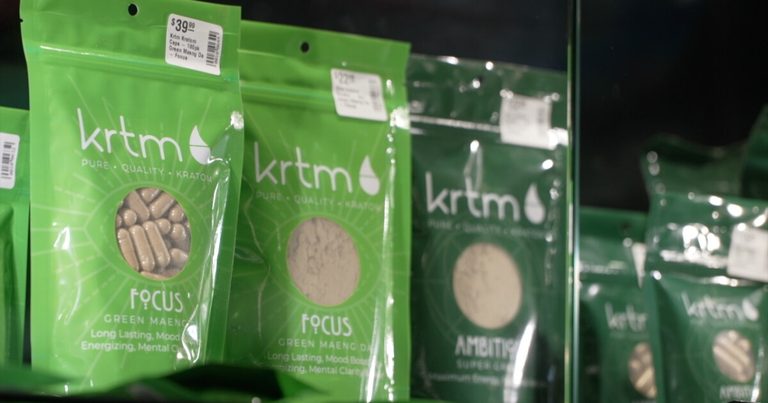
Grand Rapids – With the 2024 election cycle behind them, Michigan lawmakers are turning their attention to a pressing public‑health issue: the proposed ban on kratom and related synthetic compounds. State Rep. Aaron DeBoyer, a Republican from the 84th district, renewed his call for the bill to clear the Senate and be signed into law before the end of 2026.
Bill details and legislative history
House Bill 5537 seeks to prohibit the cultivation, synthesis, sale, distribution, and importation of kratom (Mitragyna speciosa) and synthetic variants such as 7‑OH. The measure passed the state House in March and now awaits Senate action. If enacted, Michigan would join nearly half of the states that already regulate or ban the plant.
Public‑health data driving the effort
The Centers for Disease Control and Prevention reported a 1,200% increase in kratom‑related incidents nationwide last year. Michigan’s own data show that of roughly 2,000 overdose deaths recorded in 2024, nearly half involved kratom in the toxicology report. Lawmakers argue that these figures underscore a growing risk to residents.
Expert concerns
Jamie Alan, a professor of Pharmacology and Toxicology at Michigan State University, warned that the leaf extract known as 7‑OH acts as an opioid agonist, producing effects similar to oxycodone or hydrocodone. “When combined with other substances, it can cause respiratory depression and death,” Alan said. While he acknowledged that raw kratom is a natural product, he emphasized the danger of synthetic derivatives and polydrug use.
Legislative rationale
“These are the kinds of issues that are not political; they are about the health, safety, and welfare of the state of Michigan,” DeBoyer said. He added that the bill is intended to give law‑enforcement and health officials clear authority to address the substance, rather than leaving regulation to a patchwork of local ordinances.
Opposition and next steps
Critics of the ban, including some civil‑liberties groups, argue that adults should retain the right to choose natural remedies for pain or withdrawal management. They contend that a blanket prohibition could push users toward unregulated markets. However, the bill’s sponsors counter that the synthetic variants pose a distinct danger and that regulation is needed to protect families and communities.
The Senate is expected to consider the measure in the coming weeks. If passed, Governor Gretchen Whitmer, a Democrat, would need to sign the bill for it to become law. DeBoyer expressed optimism, stating, “I would love to believe that if it were passed out of the Senate, Governor Whitmer would sign it, and then we can start to differentiate between what is safe and what is not safe.”
What this means for Michigan residents
Should the ban take effect, retailers, growers, and distributors of kratom and its synthetic analogues would be required to cease operations statewide. Law‑enforcement agencies would gain authority to seize products and pursue violations. Health officials anticipate that removing these substances from the market could reduce overdose incidents and protect vulnerable populations, particularly those struggling with chronic pain or substance‑use disorders.
For now, Michigan families and health‑care providers await the Senate’s decision, hoping that the legislation will address a growing public‑health concern while respecting individual freedoms where appropriate.
Original reporting: FOX 17 WXMI Grand Rapids (local) — read the source article.