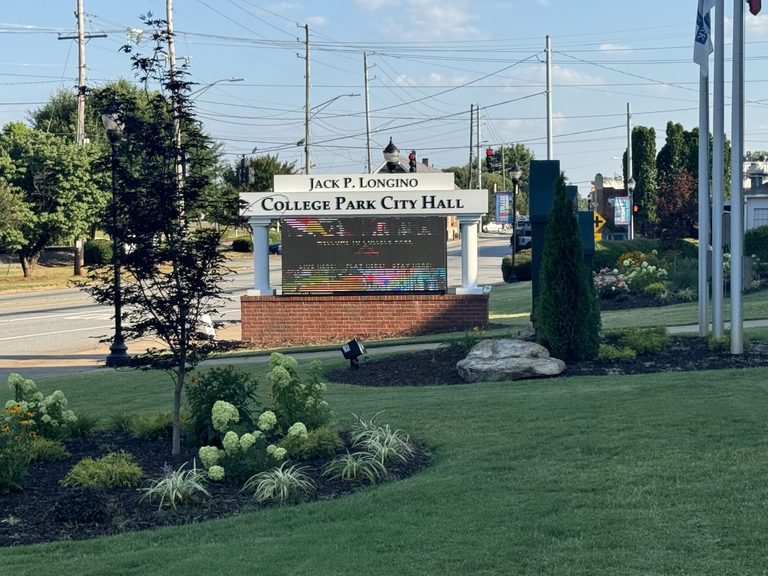
College Park’s recent decision to end a 13‑year partnership with ATL Airport District – the organization that has marketed the city to travelers – is creating immediate hardship for local workers and raising concerns about the city’s standing in the hospitality sector.
Layoffs and lost expertise
Mercedes Miller, president of ATL Airport District, told SaportaReport that the contract termination forced her to lay off her entire sales department. “They have years in the industry, they’ve engaged with clients, they go to trade shows, they put their face out there,” Miller said. “I had to lay off my entire sales department because of this.” The layoffs affect seasoned professionals who have built relationships that bring visitors and revenue to College Park.
Impact on tourism and hotel revenue
Miller warned that the dispute could ripple through Georgia’s $80 billion hospitality industry. “If a city can all of a sudden decide, ‘We are going to throw you out … and do whatever we want to do,’ that affects hotel/motel money around the state,” she said. The Georgia Hotel & Lodging Association (GHLA) echoed these concerns, noting that the city’s actions could set a precedent for other municipalities to discard established marketing partners without notice.
Legal and procedural questions
The Georgia Department of Community Affairs’ Hotel Motel Tax Performance Review Board is reviewing a complaint filed by GHLA over whether College Park can replace its destination marketing organization without ATL Airport District’s consent or board approval. A special‑called meeting to decide the matter is scheduled for Dec. 1.
College Park City Council approved Maryland‑based Destination Must Visit as the new tourism organization in June, during a special meeting held while council members were attending a convention in Savannah. Miller says the city never notified ATL Airport District of the impending change, learning of the request for proposals only days before the submission deadline.
Financial dispute
Attorney Paul Dzikowski, representing College Park, cited a reported $3.6 million deficit for ATL Airport District and questioned the organization’s financial transparency. Miller disputed that characterization, stating the district received $2.4 million from the city but spent about $3.6 million on operations, covering the shortfall with reserves rather than seeking additional city funding. She added that the city’s requested financial records were provided via a web link that officials failed to access before it expired.
Political motivations?
Some observers believe the council’s decision was driven by Councilman Roderick Gay’s desire to fund the Roderick Gay Botanical Garden and its conservancy. A recording of Gay’s August council remarks indicated he viewed the destination marketing organization as a tool for capital‑related tourism projects, suggesting a shift toward using hotel‑motel tax funds for development rather than pure promotion.
Georgia law separates hotel‑motel tax funds earmarked for tourism promotion from those designated for tourism product development, which can support capital projects. College Park’s FY2027 budget includes more than $9 million for botanical‑garden‑related projects under the product‑development category, a separate allocation from the DMO funds.
Community concerns
Mayor Bianca Motley Broom attended the hearing in support of GHLA’s complaint, sitting alongside Miller, GHLA President Chris Hardman, and other industry leaders. Destination Must Visit was represented by former Atlanta city attorney Patrise Perkins‑Hooker.
Miller noted that neither the city manager, Michael Hicks, nor council members have reached out to discuss how the transition will affect ATL Airport District’s clients. She emphasized the difficulty of informing clients that services will be unavailable, saying, “How do you tell a client, ‘I can’t serve you’ without putting them in the middle?”
Looking ahead
The outcome of the board’s decision will determine whether College Park can proceed with its new tourism partner or must reinstate ATL Airport District’s contract. Industry stakeholders hope for a resolution that protects jobs, preserves the city’s reputation, and safeguards the broader Georgia hospitality economy.
Original reporting: SaportaReport — read the source article.