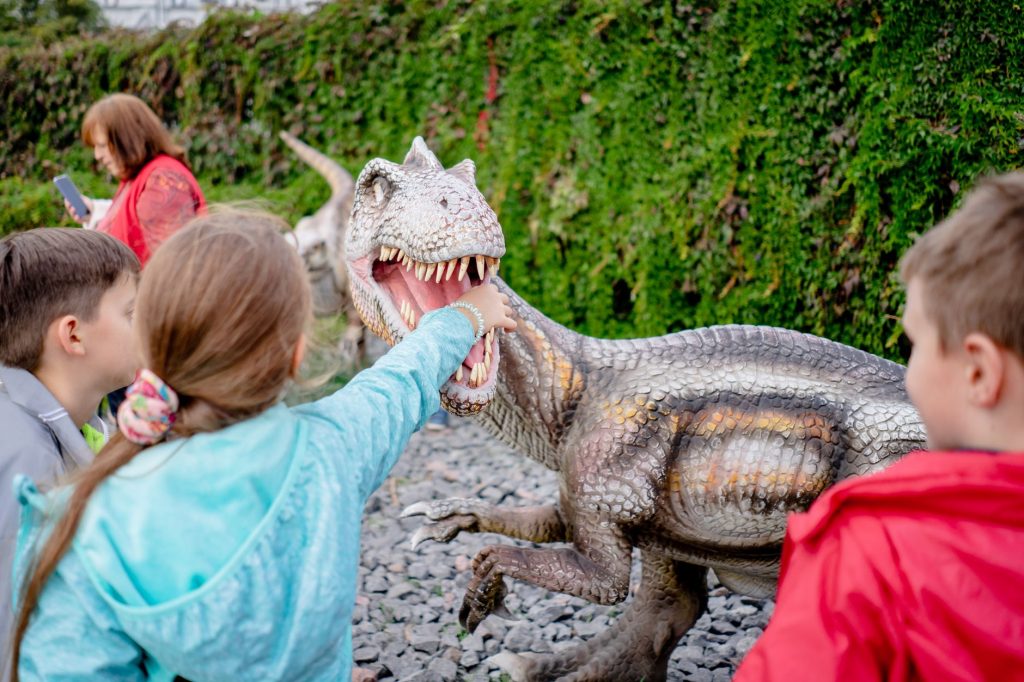
The Museum of Natural Curiosity at Thanksgiving Point sits on the Lehi side of the valley, close enough to West Jordan that families from Copper Hills and South Jordan treat it as their default weekend destination. It is not a natural history museum in the traditional sense — there are no dim corridors lined with taxidermy and faded placards. The place is loud, hands-on, and built around the idea that children absorb science better when they are physically inside it.
The building covers roughly 60,000 square feet, divided into themed zones: Waterworks, Kidopolis, Rainforest, Biome, and a dedicated Explorer’s Academy. Waterworks is the one that tends to drench small children on a weekday afternoon. Dozens of channels, dams, and sluice gates let kids redirect real flowing water, and the museum helpfully sells plastic ponchos at the front desk for a dollar or two. Bring a change of clothes anyway.
The Rainforest is a two-story living installation with live plants, insects, and a climbing structure that winds through the canopy level. It stays noticeably warmer and more humid than the rest of the building — intentional, and genuinely immersive. The Biome section covers desert, arctic, and grassland environments side by side, with animal specimens and interactive stations that hold up better than expected for repeat visits.
Kidopolis is modeled after a small city — a grocery, a bank, a construction site — and skews younger, roughly two to seven years old. The older elementary crowd tends to migrate toward the Academy, where the exhibits lean more toward engineering: pulleys, robotics kits, and a large floor-level structure for marble runs and ramps.
Admission runs around $22 to $25 per person for anyone over two, with annual passes available for $80 to $110 depending on the tier. The pass also covers partial access to other Thanksgiving Point venues, which makes the math reasonable for families who plan to return more than twice in a year. Parking on the Thanksgiving Point campus is free, which is worth noting given the size of the complex.
The museum opens at 10 a.m. most days and closes at 6 p.m., with slightly extended weekend hours during peak summer months. Midweek mornings in the fall are the quietest window — most school groups arrive before noon, and the building clears considerably by mid-afternoon. Summer Saturdays are genuinely crowded, particularly Waterworks, which develops a wait by 11 a.m.
There is a café on site serving sandwiches and snacks at typical museum prices. The surrounding Thanksgiving Point campus has a food hall nearby that offers better variety if the group is flexible about walking between buildings.
The staff throughout the museum is notably present — not hovering, but actively explaining exhibits to kids who wander up with questions. That interaction layer is what lifts it above a standard play space. The design philosophy here assumes children are curious rather than just energetic, and the exhibits mostly deliver on that assumption.
For West Jordan families making the short drive down Bangerter Highway, the Museum of Natural Curiosity is a reliable full-day anchor — one that tends to look different to a six-year-old than it did at four.