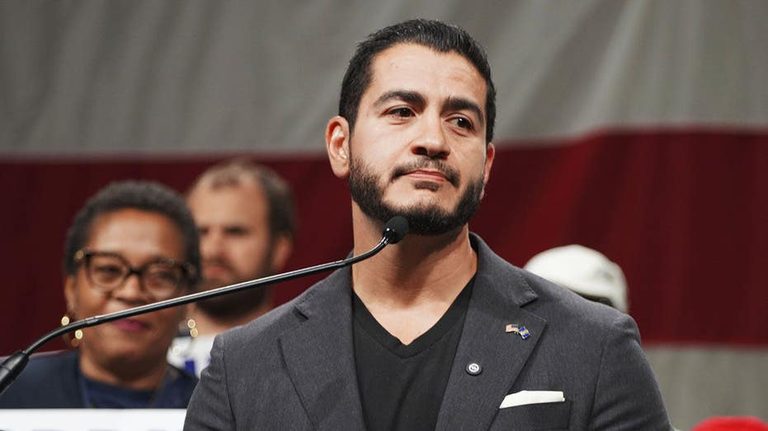
In a nationally televised interview on the daytime talk show The View, co‑host Sara Haines pressed Michigan senator‑elect Abdul El‑Sayed about his remarks following the March 12 attack on Temple Israel in West Bloomfield Township. A driver rammed a truck into the synagogue, exchanged gunfire with security and then took his own life, killing several people and wounding others, according to local authorities.
El‑Sayed initially condemned the violent act, but his subsequent comment – “Hurt people, hurt people” – referenced the attacker’s relatives who lost a child, niece and nephew in an Israeli airstrike in Lebanon. Critics argued the remark shifted sympathy toward the perpetrator’s family and downplayed the pain of the synagogue’s congregants.
Haines asked, “Your response, that ‘Hurt people, hurt people,’ after the Temple Israel attack really stuck with a lot of people. And you did apologize for that, but it took about five months to seemingly understand why that landed wrong with voters and constituents.” She followed with a question about the responsibility of leaders to challenge extremist views within their own faith, noting El‑Sayed would be the first Muslim senator in the United States.
El‑Sayed responded, “I really appreciate that question, and I agree that we want faith to uplift all of us rather than justify the worst human actions.” He recalled visiting the temple after the tragedy and attending a bar‑mitzvah there as a youth. “I condemned it immediately and wanted to offer context, but when people are hurting, context is secondary. I should have stood with their pain, and I learned from that experience. I’m not above apologizing when I make a mistake.”
He added that he had tried to explain that the attacker’s family had suffered losses in an overseas conflict, but emphasized that leaders must “stand with people’s pain with no exceptions and no asterisks.” Co‑host Joy Behar summed up the exchange with, “Better late than never.”
Expert reaction
Jesse Arm, a vice president at the Manhattan Institute and a pollster from Michigan, told Fox News Digital that the comment was “grotesque” and that the interview only amplified the problem. He likened the statement to a hypothetical politician saying, “Hurt people, hurt people,” after the 2015 Charleston church shooting. “There is no justification for attacking a synagogue full of children. Americans deserve leaders who can condemn such acts without pivoting to the terrorist’s pain,” Arm wrote.
Arm’s criticism reflects a broader concern among conservatives that moral clarity can become negotiable depending on the identities of victims and perpetrators. The backlash underscores the heightened scrutiny faced by Muslim public officials, especially in the wake of the upcoming 2026 midterm elections.
Local impact
For Michigan residents, the interview highlights the delicate balance elected officials must strike between acknowledging complex geopolitical realities and unequivocally condemning domestic anti‑Jewish violence. West Bloomfield officials have continued to work with law‑enforcement and community leaders to ensure the safety of worshippers and to support the families affected by the tragedy.
El‑Sayed’s apology and his pledge to prioritize “people’s pain” may resonate with voters who value both strong moral leadership and a compassionate approach to foreign‑policy fallout. As the 2026 election cycle intensifies, his handling of this controversy could influence swing voters in Michigan’s pivotal districts.
Original reporting: Fox News (HLL/CB) — read the source article.