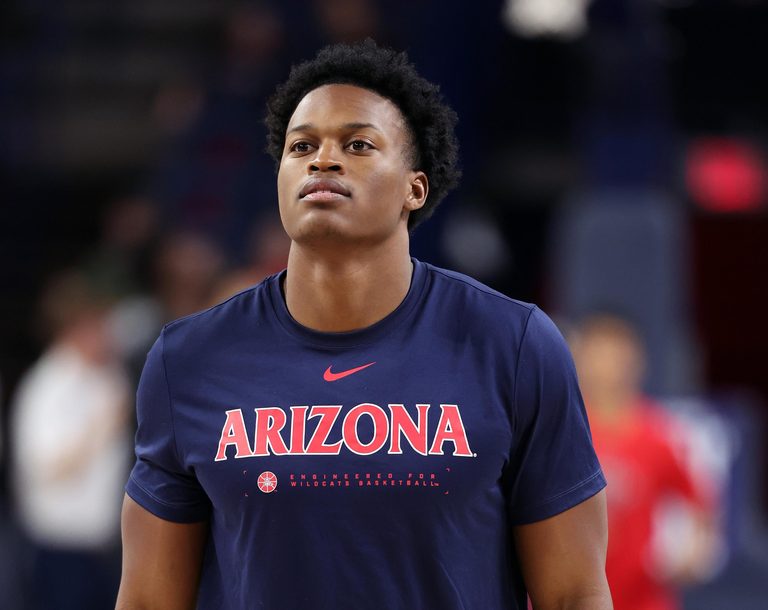
Arizona Wildcats forward RJ Godfrey, a 6‑foot‑8 senior who transferred from Clemson and Georgia, filed a lawsuit Thursday in Pima County Superior Court seeking a temporary restraining order, a preliminary injunction and a permanent injunction that would require the University of Arizona and the Arizona Board of Regents (ABOR) to declare him eligible for a fifth season of play.
Legal basis of the claim
The complaint cites a bylaw in the NCAA’s 2026‑27 Division I manual that does not make an exception for student‑athletes who graduated high school in 2022. The NCAA has said that rule applies to all such athletes, but it also leaves the final eligibility determination to each member institution. Godfrey’s suit asks ABOR and the university to honor what he argues is the plain text of the NCAA bylaw and to perform the contractual obligations they have with him as a scholarship athlete.
Why the lawsuit targets ABOR, not the NCAA
Previous challenges to the “five‑for‑five” rule have been directed at the NCAA itself, with mixed results. In most cases the NCAA appealed and either won or, as in Godfrey’s earlier case in Georgia, secured a stay against an injunction. By naming ABOR and the University of Arizona as defendants, Godfrey hopes to obtain a court order that compels the school to grant him eligibility without waiting for a final NCAA decision.
Current status of the Wildcats
Godfrey signed with Arizona in the summer but has not yet appeared in a game. He practiced with the team throughout the offseason and was on the bench for the season‑opening loss to UCLA in Las Vegas. Arizona’s home opener is Thursday night against Cal Poly at McKale Center’s AlkemE Arena. If a court grants the restraining order, the earliest Godfrey could play would be Tuesday’s home game against Northern Arizona University.
Judicial background
The case will be heard by Judge Jeffrey Bergin, the presiding judge of Pima County Superior Court. Judge Bergin is an alumnus of the University of Arizona’s law school and earned his undergraduate degree at the university, giving him a personal connection to the institution at the center of the dispute.
Potential implications
Should the court rule in Godfrey’s favor, the decision could set a precedent for other athletes seeking eligibility under the same NCAA bylaw. It would also clarify the extent of a university’s responsibility when a national governing body delegates eligibility decisions to its members. Conversely, a denial could reinforce the NCAA’s authority to leave eligibility determinations to individual schools without judicial intervention.
Reactions
The University of Arizona has not issued a public comment on the filing. The NCAA, while not named as a defendant, could still weigh in if the case proceeds to a hearing. Legal analysts note that courts have historically been reluctant to intervene in internal NCAA governance matters, but the involvement of a state university system adds a new dimension to the legal question.
Godfrey’s attorneys argue that the university’s contractual obligations to the athlete are clear and that the NCAA’s bylaw does not preclude the school from granting eligibility based on its own interpretation. They contend that the lawsuit is a necessary step to protect the athlete’s right to compete and to ensure that the university honors its commitments.
Fans and local observers are watching the case closely, as the Wildcats aim to improve a season that began with a loss to UCLA. The outcome could affect roster decisions and the team’s competitive outlook as the 2026‑27 season progresses.
Original reporting: Arizona Desert Swarm (Tucson Sports) — read the source article.