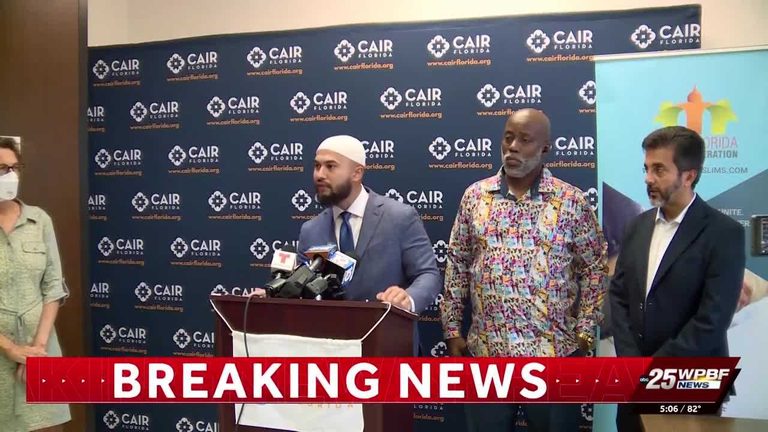
In a decisive ruling on Thursday, a federal judge refused to grant the Council on American-Islamic Relations (CAIR) an emergency injunction that would have prevented the state of Florida from labeling the national organization and its Florida chapter as domestic terrorist organizations. The decision comes after CAIR sued Governor Ron DeSantis, arguing that the designation violates the First Amendment and federal due‑process protections.
Judge’s Reasoning and Immediate Impact
The court found that CAIR had not demonstrated a likelihood of success on the merits of its constitutional claims, nor did it show that the state’s action would cause irreparable harm. As a result, the emergency request was denied, allowing the state’s designation to remain in effect while the broader lawsuit proceeds.
State Officials Celebrate the Ruling
Florida Attorney General James Uthmeier took to social media to hail the decision as a “great win by our solicitor general’s office and for the people of Florida!” He emphasized that the state’s authority to protect public safety is being upheld, and that the ruling reinforces the legitimacy of Florida’s new law aimed at combating extremist activity.
CAIR’s Response and Ongoing Legal Fight
On its website, CAIR reiterated that it believes Florida officials have “unconstitutionally targeted CAIR and CAIR‑Florida under a new and unprecedented state law.” The organization stressed its confidence in the strength of its case and pledged to continue fighting the designation in federal court.
Why This Matters for Floridians
The designation of an organization as a domestic terrorist group carries significant legal and reputational consequences. Supporters of the law argue that it provides law‑enforcement agencies with clearer tools to address groups they deem to pose a threat to public safety. Critics, however, contend that such designations could chill free‑speech rights and religious liberty.
Governor DeSantis has framed the legislation as a necessary step to safeguard Floridians from extremist ideologies, aligning with his broader agenda to strengthen state security and uphold constitutional order. The administration’s stance reflects a commitment to protecting families and communities from threats, a priority that resonates with many voters across the state.
Legal Landscape and Future Proceedings
While the emergency request was denied, CAIR’s broader lawsuit remains active. The case will likely move forward to a full hearing where the courts will examine whether Florida’s designation truly infringes upon constitutional protections. Legal experts note that the outcome could set a precedent for how states label organizations under domestic‑terrorism statutes.
For now, the ruling stands as a clear affirmation of the state’s authority to enforce its new security measures, and it underscores the ongoing debate over the balance between public safety and civil liberties.
Community Reactions
Local leaders and community groups have voiced mixed reactions. Some praise the decision as a safeguard for families, while others urge vigilance to ensure that constitutional rights are not eroded in the name of security. The conversation continues to evolve as the legal battle proceeds.
Original reporting: WPBF West Palm Beach — read the source article.