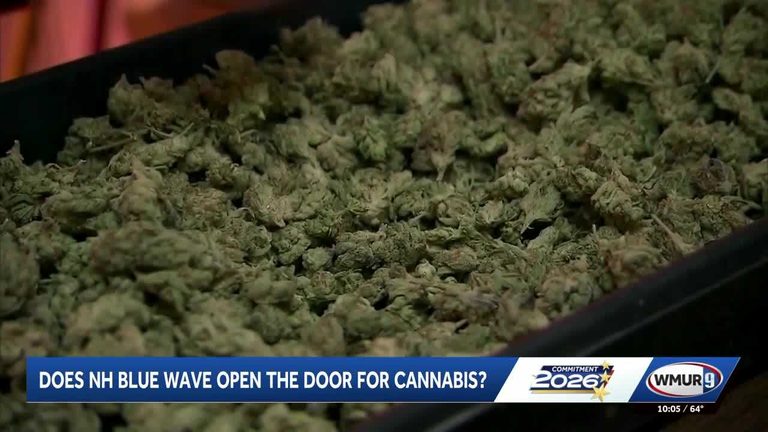
New Hampshire’s political landscape is set for a dramatic shift after the 2026 election results. Democrats are projected to hold all five seats on the Executive Council, every one of the 292 House seats, and a commanding 15 of the 24 Senate seats. This gives them a veto‑proof majority in the House and a solid majority in the Senate, creating the first Democratic‑dominated legislature in the Granite State in years.
Implications for marijuana policy
State political analyst Scott Spradling says the new balance of power will inevitably bring the long‑standing marijuana legalization debate to the forefront. “The conversation is most certainly going to happen,” Spradling noted, adding that most New Hampshire Democrats favor legalizing the plant. He warned that Governor Kelly Ayotte, a Republican and former attorney general, may be the only obstacle remaining once the new session begins in January.
Ayotte has consistently opposed legalization, citing concerns for children and public health. During the Granite State Debates held shortly before the election, she said, “I care deeply about our children. Marijuana is causing addiction… scientific research shows it increases mental illness, including schizophrenia and psychosis.” She argued that legalizing the drug would lower the quality of life for residents and have severe impacts on young adults.
Potential legislative path
Given the Democratic supermajority, supporters of legalization anticipate that a bill could pass both chambers without needing the governor’s signature. If Ayotte were to veto such a measure, lawmakers would likely pursue a veto‑override, a process that now requires only a simple majority in each chamber due to the Democratic control.
New Hampshire remains the sole New England state without legal marijuana, a distinction that has drawn attention from neighboring states that have already moved toward regulated markets. Pro‑legalization advocates argue that a regulated system could generate significant tax revenue, reduce law‑enforcement costs, and provide a safer product for adults.
Community reactions
Local residents and advocacy groups have expressed mixed feelings. Some parents echo the governor’s concerns, emphasizing the need to protect youth from potential addiction and mental‑health risks. Others point to the experiences of neighboring states, noting that regulation can include strict age limits, education campaigns, and robust enforcement against underage use.
Regardless of the outcome, the upcoming legislative session promises robust debate, with both sides likely to present data, expert testimony, and constituent stories. The discussion will also test the new legislature’s ability to work across party lines, especially on an issue that touches public safety, health, and economic considerations.
What’s next
The new General Court convenes in early January 2027. Observers will watch closely for any bills introduced on marijuana policy, the governor’s response, and the potential need for a veto‑override vote. As the state moves toward a possible policy shift, New Hampshire residents can expect town‑hall meetings, public hearings, and a flurry of media coverage as the debate unfolds.
Original reporting: WMUR (Hearst) – local news — read the source article.